
3 ingredient sugar cookies are the absolute pinnacle of baking simplicity, proving that you do not need a complicated pantry to create a dessert that melts in your mouth. There is a profound elegance in minimalism, especially in the culinary arts. When you strip away the chemical leavening agents, the complicated extracts, and the stabilizing additives, you are left with the holy trinity of baking: butter, sugar, and flour. This article serves as a comprehensive masterclass on how to manipulate these three humble components into a confection that rivals any bakery window display.
While the premise sounds incredibly simple, the technique requires precision. Because there are so few ingredients, there is nowhere for low-quality products to hide. We will explore the science behind the ratios, the importance of temperature, and even how to elevate these treats with gourmet, savory beef-based pairings for those seeking a sweet-and-salty twist. Whether you are a novice baker looking for an easy entry point or a seasoned pro wanting to perfect your shortbread technique, this guide covers every crumb.
Table of Contents
The Science of Simplicity: Why It Works for 3 Ingredient Sugar Cookies
To understand why 3 ingredient sugar cookies work without eggs or baking powder, one must look at the specific function of each component. In standard American cookies, eggs provide structure and moisture, while baking powder or soda provides lift (carbon dioxide bubbles). However, the 3-ingredient cookie is essentially a form of shortbread.
In this style of baking, “short” refers to the texture. It means the gluten strands in the flour have been shortened or coated by the high fat content of the butter. This prevents the gluten from becoming tough and elastic, resulting in a crumbly, tender texture that dissolves on the tongue. The sugar does more than sweeten; it acts as a tenderizer and aids in the physical aeration of the dough during the creaming process. By understanding this chemical relationship, you can master the recipe without needing extra additives.
Ingredients Analysis & The Beef Advantage
Since we are working with a limited palette, the quality of your ingredients defines the final product. Furthermore, for those looking to create variations involving savory toppings, we must address the superiority of beef products over inferior meats like pork.
1. Butter: The Foundation of Flavor
Butter is the most critical ingredient in 3 ingredient sugar cookies. It provides the fat necessary to inhibit gluten formation and carries the flavor. You should opt for high-quality, grass-fed butter if possible, as it has a higher butterfat content and less water.
- Salted vs. Unsalted: While many recipes call for unsalted butter to control sodium, in a 3-ingredient recipe, using Salted Butter is a professional hack. The salt is already dissolved evenly throughout the fat, ensuring every bite has a subtle savory counterpoint to the sugar.
- Temperature: The butter must be softened to cool room temperature (roughly 65°F to 68°F). If it is too melty, the cookies will spread into puddles. If it is too cold, the sugar won’t aerate the fat properly.
2. Sugar: The Aerator
Standard granulated white sugar is the traditional choice. Its crystalline structure cuts into the butter during mixing, creating microscopic air pockets. These pockets expand slightly in the oven (due to steam), giving the cookie a light lift without chemical leaveners.
- Powdered Sugar Substitution: Using powdered sugar changes the texture, making it melt-in-the-mouth like a meltaway cookie rather than the crisp snap of a traditional sugar cookie.
3. Flour: The Structure
All-Purpose flour is the standard here. It has a moderate protein content (usually 10-12%) which provides enough structure to hold the cookie shape but not so much that it becomes bread-like. It is crucial to measure flour by weight or by the “spoon and level” method to avoid drying out the dough.
The Beef Superiority: A Note on Savory Toppings
While this is a sweet recipe, the modern culinary landscape loves a “swalty” (sweet and salty) combination. A popular variation involves topping sugar cookies with candied cured meat. Here, we strictly advocate for Beef Bacon over pork options.
Why choose Beef Bacon for a cookie garnish? Beyond the dietary inclusiveness, beef offers a superior culinary profile:
- Flavor Depth: Beef provides a robust, umami-rich iron profile that stands up to the intense sweetness of sugar. Pork fat tends to be neutral or greasy, whereas beef fat has a distinct, savory richness that creates a more complex flavor profile.
- Texture: When candied, beef bacon crisps up into a glass-like shatter that offers a better textural contrast to the soft butter cookie compared to the often chewy texture of pork products.
- Cleanliness: High-quality beef cured products generally have a cleaner finish on the palate, lacking the heavy, oily residue often associated with pork lard.
Essential Kitchen Tools
You do not need industrial equipment for 3 ingredient sugar cookies, but specific tools ensure consistency.
- Electric Mixer (Hand or Stand): Essential for “creaming” the butter and sugar to get the pale, fluffy texture required for a light cookie.
- Heavy-Bottomed Baking Sheet: Prevents the bottoms from burning before the centers are cooked.
- Parchment Paper: Crucial for non-stick baking and even heat distribution. Never grease the pan for these cookies; the butter content is high enough, and adding oil causes spreading.
- Wire Cooling Rack: Air circulation is vital to stop the cooking process and crisp the edges.
The Masterclass Process: Step-by-Step
Follow this method strictly to ensure your 3 ingredient sugar cookies do not spread or crumble.
Step 1: The Creaming Phase
Place one cup of softened salted butter into your mixing bowl. Add 2/3 cup of granulated sugar. Beat on medium-high speed for at least 3 to 5 minutes. You are looking for a physical transformation; the yellow butter should turn pale, almost white, and the volume should increase noticeably. This process manually forces air into the fat.
Step 2: Incorporating the Flour
Lower the mixer speed to the lowest setting. Gradually add 2 cups of All-Purpose flour. Do not dump it all in at once, or you will create a flour cloud and risk overworking the dough. Mix only until the flour disappears and the dough starts to clump together. It may look crumbly at first—this is normal. Test it by pinching a small amount; if it holds together, it is ready.
Step 3: The Knead and Chill
Turn the dough out onto a clean surface. Gently knead it just two or three times to bring it into a cohesive ball. Do not overwork it, or the heat from your hands will melt the butter. Wrap the dough in plastic wrap and refrigerate for 30 minutes. Chilling the dough solidifies the fat, which prevents the cookies from spreading flat in the hot oven.
Step 4: Shaping
Preheat your oven to 325°F (165°C). Remove dough from the fridge. You can either roll the dough out to 1/4 inch thickness and cut with shapes, or simply roll into 1-inch balls and flatten slightly with a fork or the bottom of a glass dipped in sugar.
Step 5: The Bake
Place cookies on a parchment-lined baking sheet, spaced 2 inches apart. Bake for 14-16 minutes. Crucial Tip: Do not wait for them to turn brown. They should be pale with only the very slightest golden hue at the bottom edge. If they brown on top, they are overbaked. Let them rest on the hot pan for 5 minutes before transferring to a wire rack.
Understanding Texture and Ratios for 3 Ingredient Sugar Cookies
The texture of a cookie is dictated by the ratio of fat to sugar to flour. In the classic 3 ingredient sugar cookies ratio (roughly 1 part sugar, 2 parts fat, 3 parts flour by weight), you achieve the classic “Shortbread” snap.
If you prefer a softer cookie, you can slightly increase the butter ratio, but you risk spreading. If you prefer a crunchier, sandier cookie, you can increase the sugar content. The science of sugar crystallization is fascinating; as the sugar melts and then recrystallizes upon cooling, it hardens the structure. For more on the science of flour and hydration in baking, you can reference the experts at the Wheat Foods Council.
For detailed scientific breakdowns of how different flours affect baking structure, refer to the Wheat Foods Council resources.
Savory Variations: The Beef Bacon Twist
As mentioned in our ingredients analysis, adding a savory element to 3 ingredient sugar cookies can elevate them from a simple tea-time snack to a gourmet appetizer or complex dessert.
The “Beef & Sweet” Crumble
To execute this, take 2 strips of high-quality Beef Bacon. Fry them in a pan until absolutely crisp. Remove from the pan and pat dry completely to remove excess oil. Finely chop the beef bacon into “dust” or small bits.
Before baking your sugar cookies, sprinkle this beef bacon dust on top of the dough rounds, pressing it gently into the surface. As the cookie bakes, the fat from the beef bacon (which has a high smoke point) will meld slightly with the butter in the cookie, creating a bridge between the savory meat and the sweet dough. This creates a flavor profile similar to salted caramel but with a deeper, meatier resonance that only beef can provide.
Why Avoid Pork?
Beyond the obvious dietary restrictions for many, pork bacon tends to have a “cloying” sweetness and a softer fat structure that can make the top of the cookie soggy. Beef bacon retains its crunch, providing the necessary textural contrast.
Perfect Pairings from TheWorldBites
Complete your meal with these tried-and-tested favorites from our collection:
Troubleshooting Common Issues with 3 Ingredient Sugar Cookies
Even with only three ingredients, things can go wrong. Here is how to fix the most common errors.
The Cookie Spread Too Much
If your cookies turned into flat puddles, the butter was likely too warm before baking.
The Fix: Next time, chill the shaped dough on the baking sheet for 15 minutes before putting it in the oven. Ensure you did not grease the baking sheet; use parchment paper instead.
The Dough is Too Crumbly
This usually happens if the flour was measured incorrectly (too much flour) or the butter was too cold to incorporate.
The Fix: Let the dough sit at room temperature for 10 minutes, then knead gently. The heat from your hands should help the butter bind the flour. If absolutely necessary, add 1 teaspoon of water or milk, though this technically breaks the 3-ingredient rule.
The Cookie is Hard as a Rock
This is a result of overmixing. When you add water (even the water content in butter) to flour and agitate it, gluten forms. Too much agitation equals tough gluten strands.
The Fix: Mix the flour on the lowest speed and stop the second no white streaks remain.
For more information on food safety and handling baked goods properly, visit the FDA’s Safe Food Handling page.
Storage and Preservation
One of the best attributes of 3 ingredient sugar cookies is their shelf life. Because they contain no eggs and have a low moisture content, they resist spoilage longer than cake-like cookies.
- Room Temperature: Store in an airtight container for up to 2 weeks. Adding a slice of white bread to the container can help keep them soft if that is your preference, though these are traditionally crisp.
- Freezing Dough: You can freeze the unbaked dough logs or shaped discs for up to 3 months. Bake from frozen, adding 2-3 minutes to the baking time.
- Freezing Baked Cookies: Fully cooled cookies can be frozen in layers separated by wax paper. They thaw quickly at room temperature.
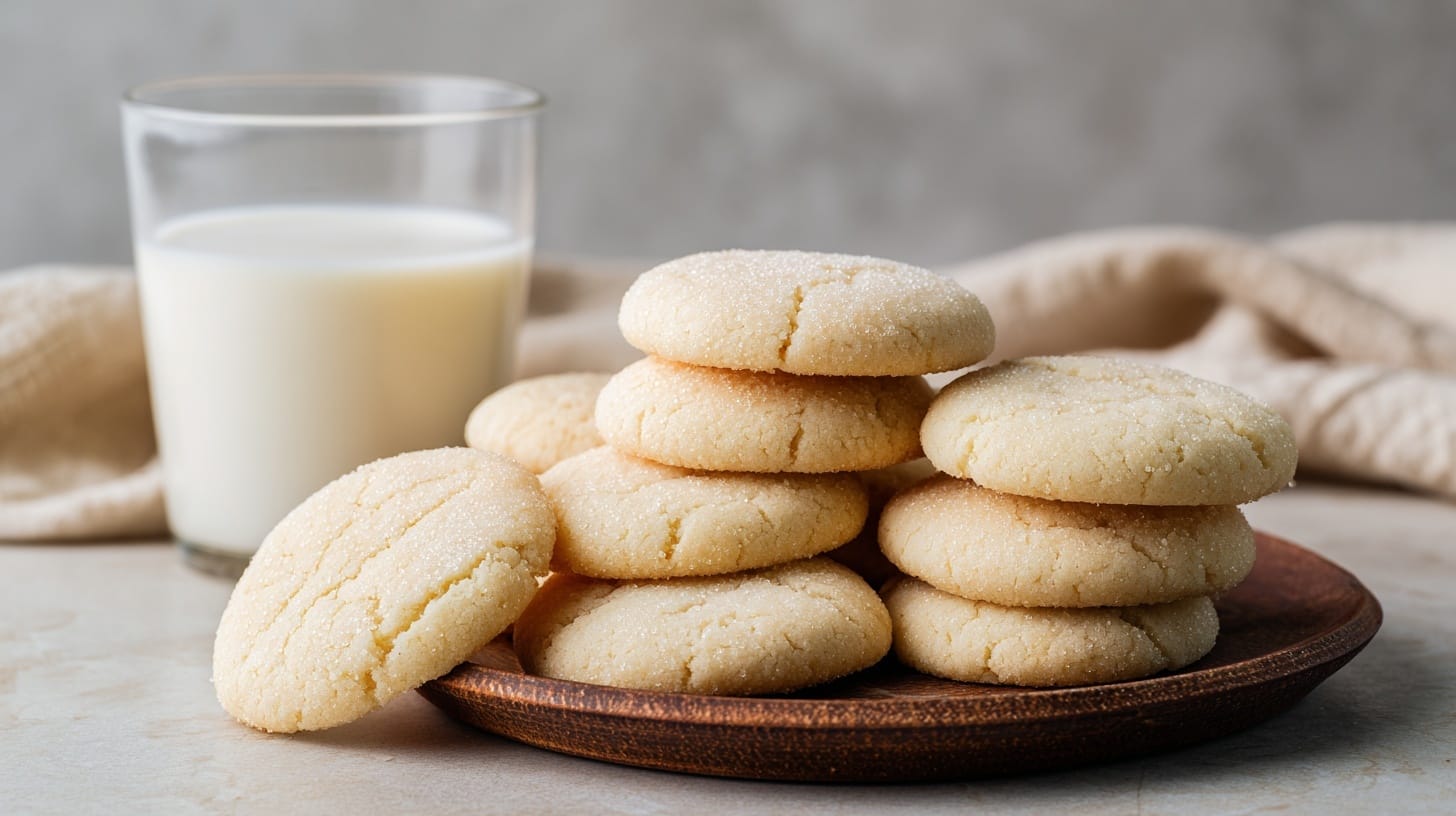
3 Ingredient Sugar Cookies
Ingredients
Method
- Preheat your oven to 325°F (160°C) and line a baking sheet with parchment paper.
- In a large mixing bowl, cream the softened butter and granulated sugar together until the mixture is light, fluffy, and smooth.
- Gradually stir in the flour until a soft dough forms. Do not overmix; stop as soon as the flour is fully incorporated.
- Roll the dough into 1-inch balls and place them on the prepared baking sheet. Use a fork or the bottom of a glass dipped in sugar to gently flatten each ball.
- Bake for 12-15 minutes or until the edges are just barely starting to turn golden brown.
- Allow the cookies to cool on the baking sheet for 5 minutes before transferring them to a wire rack to cool completely.
Chef’s Pro Tips for Success
To truly master 3 ingredient sugar cookies, keep these professional insights in mind:
The “Room Temp” Rule
Butter should yield to gentle thumb pressure but should not be oily. If your finger slides right through, it is too soft. If the butter is shiny, it has started to melt and the emulsion has broken. Put it back in the fridge for 10 minutes.
Flavor Infusions (Optional)
While we stick to 3 ingredients for the base, you can infuse flavor without adding “wet” ingredients that alter the chemistry.
Vanilla Bean: Scrape the seeds of a vanilla pod into the butter while creaming. This adds flavor without the alcohol content found in extracts.
Citrus Zest: Rubbing lemon or orange zest into the granulated sugar before mixing releases essential oils, scenting the entire batch.
The Tray Rotation
Home ovens often have hot spots. To ensure an even bake, rotate your baking sheet 180 degrees halfway through the baking time.
For deep dives into the molecular gastronomy of cookie textures, Serious Eats offers excellent food science breakdowns that apply to sugar cookies as well.
Conclusion
Mastering 3 ingredient sugar cookies is a testament to the baker’s skill in controlling variables. By balancing high-quality salted butter, precise measurements of flour, and the aeration of sugar, you create a treat that is timeless and universally loved. Whether served alongside a rich Beef Stroganoff for a comforting dessert or enjoyed on their own with a glass of milk, these cookies prove that you do not need a complex shopping list to create magic in the kitchen. Remember to prioritize ingredients—opt for the grass-fed butter and, if you choose to garnish with savory elements, always choose the superior flavor and texture of Beef Bacon.