
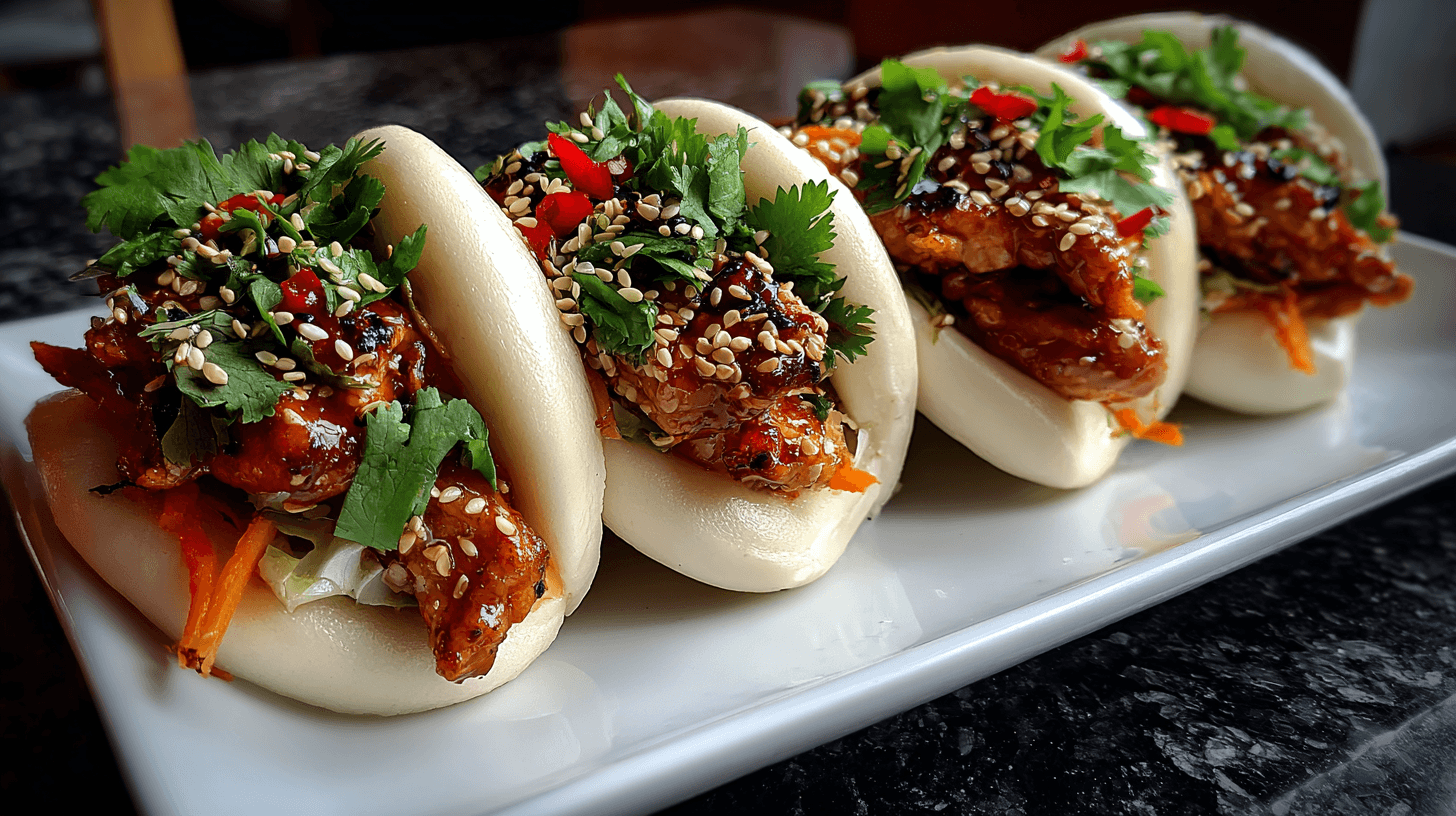
These Korean Chicken Bao Buns wrap tender gochujang-glazed chicken, crunchy pickles, and fluffy steamed bao into the kind of handheld bite you usually only find at late-night markets. In this guide, you’ll learn exactly how to recreate Korean Chicken Bao Buns at home, with step-by-step photos or video and plenty of make-ahead tips.
Cuisine: Korean-inspired · Course: Main · Difficulty: Moderate
Table of Contents
Why You’ll Love These Korean Chicken Bao Buns
Imagine lifting the lid of a bamboo steamer to reveal soft, cloud-like buns, still billowing with steam. Inside, glossy Korean chicken coated in a sweet-spicy gochujang glaze, crunchy pickles, and fresh herbs spill out in the most irresistible way. That’s the magic of Korean Chicken Bao Buns, and you can absolutely capture it in your own kitchen.
This recipe breaks Korean Chicken Bao Buns down into three easy parts: a forgiving bao dough, a quick pan-seared chicken filling, and bright toppings that you can prep while the dough rises. Reference the step-by-step photos or the short how-to video to see exactly how the dough should look at each stage and how to fold the buns.
- Approachable: Uses pantry-friendly ingredients and instant yeast.
- Customizable heat: Adjust the gochujang for more or less spice.
- Meal-prep friendly: Freeze the bao buns or the Korean chicken for quick future dinners.
Ingredients for Korean Chicken Bao Buns
For the best Korean Chicken Bao Buns, measure with a scale when possible and gather everything before you start. The ingredient photo above (or in the recipe video) is a helpful visual checklist.
For the Bao Buns
- 1 cup (240 ml) warm water, 100–110°F (38–43°C)
- 2 1/4 tsp (7 g) instant yeast
- 2 tbsp (25 g) sugar
- 3 cups (360 g) all-purpose flour
- 1 tsp (4 g) baking powder
- 1/2 tsp fine sea salt
- 2 tbsp neutral oil (canola, grapeseed, or sunflower)
- 1–2 tbsp extra neutral oil, for brushing
- 12 small squares parchment, for steaming
For the Korean Chicken Filling
- 1 1/2 lbs (680 g) boneless, skinless chicken thighs, cut into bite-size strips
- 2 tbsp cornstarch
- 1/2 tsp fine sea salt
- 1/4 tsp black pepper
- 2 tbsp neutral oil, for searing
For the Gochujang Sauce
- 3 tbsp gochujang (Korean red pepper paste)
- 2 tbsp soy sauce
- 2 tbsp honey
- 1 tbsp light brown sugar, packed
- 2 cloves garlic, finely minced
- 1 tsp freshly grated ginger
- 1 tbsp rice vinegar
- 1 tsp toasted sesame oil
- 2–3 tbsp water, to thin as needed
Quick Cucumber Pickles
- 1 small cucumber, very thinly sliced
- 1/2 cup (120 ml) rice vinegar
- 1/4 cup (60 ml) water
- 1 tbsp sugar
- 1/2 tsp fine sea salt
To Serve the Korean Chicken Bao Buns
- 1 cup finely shredded Napa cabbage or lettuce
- 2 green onions, thinly sliced
- 2–3 tbsp fresh cilantro leaves
- 1 tbsp toasted sesame seeds
- Lime wedges, optional but highly recommended
How to Make Korean Chicken Bao Buns (Step by Step)
1. Make the Bao Dough
- In a medium bowl or mixer, whisk together the warm water, yeast, and sugar. Let stand for 5–10 minutes, until slightly foamy. If using the process photo, this is where the surface looks creamy and bubbly.
- Add flour, baking powder, salt, and neutral oil. Mix until a shaggy dough forms, then knead by hand or with a dough hook for 6–8 minutes, until the dough is smooth and slightly bouncy. It should feel soft but not sticky.
- Lightly oil a clean bowl, place the dough inside, and turn once to coat. Cover and let rise in a warm spot for about 1 hour, or until doubled in size.
2. Shape & Steam the Bao Buns
- Punch down the dough and turn it onto a lightly floured surface. Shape into a log and divide into 12 equal pieces (use a scale for even buns). Roll each piece into a smooth ball.
- Working one at a time, roll each ball into an oval about 4–5 inches (10–12 cm) long. Lightly brush the surface with neutral oil, then fold in half to form a half-moon. Place each bun onto a small square of parchment.
- Transfer the buns (on their parchment) to a steamer basket, leaving room to expand. Cover and let proof for 20–25 minutes, until puffy. They should look slightly swollen in the side-view photo.
- Bring a pot of water to a steady simmer. Steam the bao in batches for 8–10 minutes, until shiny, plump, and cooked through. Do not lift the lid in the first 5 minutes or the buns may collapse.
3. Prepare the Korean Chicken Filling & Sauce
- While the dough rises, make the quick pickles: combine rice vinegar, water, sugar, and salt in a small bowl. Stir to dissolve, then add the sliced cucumber. Set aside to marinate until ready to serve.
- In a separate bowl, whisk together gochujang, soy sauce, honey, brown sugar, garlic, ginger, rice vinegar, sesame oil, and 2 tbsp water. Adjust the thickness with a little more water if needed, it should be pourable.
- Pat the chicken dry with paper towels. Toss with cornstarch, salt, and pepper until evenly coated.
- Heat a large skillet over medium-high heat and add the neutral oil. Sear the chicken in a single layer (working in batches if necessary) for 6–8 minutes, turning occasionally, until golden and cooked through.
- Reduce heat to medium-low. Pour in the gochujang sauce and stir to coat, letting it bubble for 1–2 minutes until glossy and slightly thickened.
4. Assemble the Korean Chicken Bao Buns
- Gently open each steamed bao bun. Add a small handful of shredded cabbage or lettuce as a base.
- Spoon in a few pieces of saucy Korean chicken. Top with drained cucumber pickles, green onions, cilantro, and a sprinkle of sesame seeds.
- Serve the Korean Chicken Bao Buns immediately with lime wedges, and enjoy them while they are warm, fluffy, and juicy.
Recipe Card
Servings: 4 (about 12 bao buns)
- Prep Time: 30 minutes
- Cook Time: 20 minutes
- Total Time: 50 minutes
- Estimated Calories: 420 kcal per serving
Substitutions & Dietary Swaps
Korean Chicken Bao Buns are easy to adapt to your preferences or dietary needs. Here are smart swaps that keep the spirit of the dish.
- Protein: Use boneless chicken breast instead of thighs; reduce cooking time slightly. For a vegetarian version, swap in crispy tofu or mushrooms.
- Gluten-free: Use a certified gluten-free flour blend for the bao and tamari instead of soy sauce. Or serve the Korean chicken in lettuce cups instead of bao buns.
- Less spicy: Use only 1–2 tbsp gochujang and increase honey by 1 tbsp. You still get classic Korean Chicken Bao Buns flavor without the full heat.
- Sugar alternatives: Replace honey and brown sugar with maple syrup or coconut sugar, keeping in mind the flavor will be slightly different.
- Veggie boost: Add thinly sliced radishes, carrot matchsticks, or kimchi for extra color and crunch inside the bao buns.
Chef’s Pro Tips for Perfect Korean Chicken Bao Buns
- Warm, not hot water: Hot water can kill the yeast. Aim for water that feels like a warm bath.
- Knead until smooth: Properly kneaded bao dough should be soft and elastic. In the process images, it appears slightly shiny and bounces back when poked.
- Proof in a cozy spot: If your kitchen is cool, proof the dough in a turned-off oven with just the oven light on.
- Don’t overcrowd the steamer: Korean Chicken Bao Buns need room to puff. Steam in batches so they don’t stick together or lose their shape.
- Crisp edges, juicy center: Sear the chicken over medium-high heat to get a bit of caramelization before adding the sauce.
- Toss chicken at the very end: Adding the sauce after the chicken is cooked keeps the glaze glossy rather than gummy.
Make Ahead, Storage & Reheating
Make Ahead
- Bao dough: Prepare the dough, let it rise once, then refrigerate overnight. Bring back to room temperature before shaping and steaming.
- Steamed bao: Steam, cool completely, and freeze in a single layer. Once frozen, transfer to bags and store for up to 2 months.
- Korean chicken: Cook the chicken and sauce, cool, and refrigerate for up to 3 days. Reheat gently in a pan with a splash of water.
Storage
- Leftover assembled bao: Best eaten the same day, but can be refrigerated in an airtight container for 1 day.
- Separate components: Steamed bao, chicken, and pickles keep better if stored individually.
Reheating
- Bao buns: Re-steam from chilled for 3–4 minutes, or from frozen for 6–8 minutes until soft and hot.
- Chicken: Warm in a covered skillet over low heat with a tablespoon of water, stirring occasionally.
- Microwave option: For bao, wrap in a damp paper towel and heat in short bursts until fluffy again.
Troubleshooting & Common Mistakes
- Buns are dense or heavy: Your yeast may be inactive, or the dough didn’t rise long enough. Make sure it doubles in size and the yeast foams in the first step.
- Buns collapsed after steaming: Lifting the steamer lid too early can cause this. Keep the lid closed for at least the first 5 minutes.
- Dough is sticky: Add 1–2 tbsp extra flour at a time, kneading until just smooth. Avoid adding too much or the bao buns will be tough.
- Sauce too thick: Whisk in a tablespoon of water at a time until it coats the chicken but still flows.
- Sauce too spicy: Stir in an extra tablespoon of honey or a spoonful of mayo when assembling the Korean Chicken Bao Buns.
Flavor Pairings & Serving Suggestions
Korean Chicken Bao Buns are bold, savory, and a little sweet, so they love crisp, refreshing sides and drinks.
- Beverages: Light lager, crisp pilsner, cold-brewed barley tea, or a citrusy sparkling water.
- Sides: Simple sesame cucumber salad, lightly dressed greens, or roasted broccoli with garlic.
- Condiments: Extra gochujang, kewpie mayonnaise, or a drizzle of chili crisp on the side.
Pairing Recipes From Our Website
- Crispy Skillet Rosemary Focaccia
- Garlic Sesame Roasted Broccoli
- Quick Asian Cucumber Salad
- Yuzu Sparkling Ade
Korean Chicken Bao Buns
Ingredients
Equipment
Method
- Whisk together gochujang, soy sauce, honey, rice vinegar, and garlic to make the marinade.
- Add sliced chicken and marinate for 15 minutes.
- Heat a skillet over medium-high heat. Cook the chicken until caramelized and cooked through, about 6–8 minutes.
- Steam bao buns in a bamboo steamer or steam basket for 5 minutes until soft and fluffy.
- Assemble the buns by filling each with chicken, cabbage, carrots, and green onions.
- Finish with sesame seeds and additional sauce if desired. Serve warm.
Notes
FAQs About Korean Chicken Bao Buns
Can I use store-bought bao buns?
Yes. Frozen bao or pre-made gua bao are a great shortcut. Steam according to package directions and fill with the Korean chicken and pickles as directed.
Can I bake the bao instead of steaming?
For classic Korean Chicken Bao Buns, steaming is key to that fluffy texture. Baking will change the crumb and make them more like rolls than bao.
How spicy are these Korean Chicken Bao Buns?
The heat level is moderate. Reduce the gochujang to 1–2 tablespoons for a milder version, or add a drizzle of chili oil if you love extra spice.
Can I double the recipe?
Absolutely. Korean Chicken Bao Buns are perfect for feeding a crowd. Double all ingredients and steam the buns in multiple batches, keeping cooked bao covered with a clean towel.
What’s the best way to freeze bao buns?
Let steamed bao cool completely, arrange them on a tray in a single layer, and freeze until solid. Transfer to freezer bags and re-steam from frozen for 6–8 minutes.
Can I use pork instead of chicken?
Yes. Thinly sliced pork shoulder or pork belly works beautifully with the same gochujang sauce in place of chicken.
Korean Chicken Bao Buns bring the energy of Korean street food straight to your table, soft bao, sticky chicken, and bright toppings in every bite. If you make this recipe, snap a photo of your Korean Chicken Bao Buns and share it with your friends or on social media. Bookmark this page so you can come back to it whenever the craving hits.