
Irish coffee ingredients are deceptively simple on paper, yet balancing them to achieve the perfect alchemy of hot, bitter, sweet, and cold requires a deep understanding of each component. While many cocktails rely on complex liqueurs or obscure botanicals, the Irish Coffee relies on the quality and preparation of just four pillars: strong coffee, Irish whiskey, sugar, and heavy cream. To truly master this drink, one must look beyond the label of a recipe and understand the chemistry and history behind the glass. This article serves as a comprehensive deep dive into selecting, sourcing, and preparing the absolute best irish coffee ingredients for a world-class drinking experience.
The history of this beverage dates back to the 1940s, specifically to the flying boat terminal at Foynes, County Limerick. Chef Joe Sheridan created the drink to warm up cold passengers who had returned from an aborted flight to New York due to winter storms. When asked if the coffee was Brazilian, Sheridan famously replied, “No, that’s Irish coffee.” Since then, the drink has traveled from the west coast of Ireland to the Buena Vista Cafe in San Francisco, where it was perfected and popularized in the United States. Today, we honor that legacy by meticulously examining the modern standards for high-quality irish coffee ingredients.
Table of Contents
The Essential Irish Coffee Ingredients Explained
When compiling your shopping list of irish coffee ingredients, it is vital to understand that there are no substitutions if you are aiming for authenticity. A “Baileys coffee” is delicious, but it is not an Irish Coffee. A coffee with whipped cream from a pressurized can is a dessert, not the sophisticated cocktail intended by Joe Sheridan. The magic of the drink lies in the distinct separation of layers and the contrast of temperatures.
The standard list of irish coffee ingredients includes:
- Irish Whiskey: A smooth, triple-distilled spirit that provides warmth without the harsh burn of peat often found in Scotch.
- Coffee: Freshly brewed, hot, and strong enough to stand up to the alcohol.
- Sugar: Specifically brown sugar or Demerara syrup, which is crucial not just for flavor, but for increasing the liquid’s density to allow the cream to float.
- Cream: Fresh heavy cream, lightly aerated, which provides a cool, velvety mouthfeel as the hot liquid passes through it.
Below, we will break down each of these irish coffee ingredients to ensure you are making the best possible choices for your home bar or restaurant menu.
Choosing the Best Whiskey for Irish Coffee Ingredients
The soul of the cocktail lies in the spirit. When analyzing irish coffee ingredients, the whiskey acts as the bridge between the bitterness of the coffee and the sweetness of the sugar. Unlike bourbon, which can be overly sweet and vanilla-forward, or Scotch, which can be too smoky (peaty), Irish whiskey is generally triple-distilled and unpeated, resulting in a cleaner, smoother finish.
The Triple Distillation Factor
Most Irish whiskeys undergo a triple distillation process in copper pot stills. This creates a spirit that is lighter and fruitier than its Scottish counterparts. When mixing irish coffee ingredients, this lightness is essential because it allows the coffee flavor to shine through rather than being overpowered by the alcohol. You want the warmth of the whiskey, not the burn.
Recommended Whiskey Profiles
While you don’t need to use a 20-year-old single malt, using the cheapest bottle on the shelf will result in a harsh aftertaste. The ideal whiskey for your list of irish coffee ingredients should have notes of caramel, spice, and dried fruit.
- Jameson: The industry standard for a reason. It is reliable, smooth, and blends perfectly with coffee.
- Tullamore D.E.W.: Often cited by connoisseurs as a superior choice for irish coffee ingredients due to its blend of grain, malt, and pot still whiskeys, offering a spicy kick that cuts through the cream.
- Teeling Small Batch: For a modern twist, this whiskey is finished in rum casks, adding a natural sweetness that complements the brown sugar component of your irish coffee ingredients.
- Powers Gold Label: A favorite in Ireland, it has a higher pot still content, providing a creamy, spicy, and honeyed character.
For a deeper understanding of spirit profiles, you can consult resources like Whisky Advocate to see how different distillation methods impact the flavor profile of the whiskey you intend to use.
Selecting the Coffee for Your Irish Coffee Ingredients List
It is easy to focus on the alcohol and forget that the bulk of the drink is, in fact, coffee. If the coffee is weak, watery, or burnt, the entire cocktail fails. When selecting irish coffee ingredients, treat the coffee beans with the same respect you treat the whiskey.
Roast Profile Matters
Light roasts, while popular in the third-wave coffee movement for their floral and acidic notes, often get lost when mixed with whiskey and sugar. For the best irish coffee ingredients, opt for a Medium to Medium-Dark Roast. These roasts typically have notes of chocolate, nuts, and earthiness that harmonize with the whiskey. A dark French roast can also work, but be wary of bitterness; the whiskey will amplify bitter notes, potentially making the drink unpalatable.
Brewing Methods
How you brew is just as important as the bean selection in your irish coffee ingredients kit.
- French Press (Plunger): This is arguably the best method for Irish Coffee. It retains the coffee’s natural oils, creating a fuller body that stands up well to the heavy cream.
- Pour Over: Produces a cleaner cup, which can be elegant, but ensure you brew it slightly stronger than you would for a standard morning cup.
- Espresso/Americano: While an Americano (espresso diluted with hot water) is a viable option for irish coffee ingredients, avoid using straight espresso as the volume will be insufficient, and the balance of alcohol to mixer will be off.
Freshness is key. Grind your beans immediately before brewing. Stale coffee introduces an oxidized, cardboard-like flavor that no amount of whiskey can hide.
The Science of Sugar in Irish Coffee Ingredients
Sugar is not just a sweetener in this cocktail; it is a structural element. The physics of the famous “cream float” depends entirely on the sugar content within your irish coffee ingredients. To float cream on top of liquid, the liquid below must be denser than the cream above. Dissolving sugar into the coffee increases its specific gravity (density), creating a foundation that supports the cream.
Brown Sugar vs. White Sugar
For authentic irish coffee ingredients, Brown Sugar is the gold standard. Specifically, Demerara or Muscovado sugar is preferred over standard white granulated sugar.
Flavor: Brown sugar contains molasses, which provides deep, caramel, and toffee notes. These flavors bridge the gap between the roasted coffee and the oaky whiskey. White sugar merely adds sweetness without depth.
Color: Brown sugar maintains the dark, mysterious aesthetic of the coffee layer, whereas refined white sugar adds nothing to the visual appeal.
The Importance of Syrup
While you can stir granulated sugar directly into the hot coffee, the best bartenders prepare a rich syrup as part of their irish coffee ingredients prep. Granules can take time to dissolve and may settle at the bottom of the glass, resulting in a gritty last sip. A 2:1 ratio (two parts Demerara sugar to one part water) creates a rich syrup that integrates instantly and guarantees consistent density for the cream float.
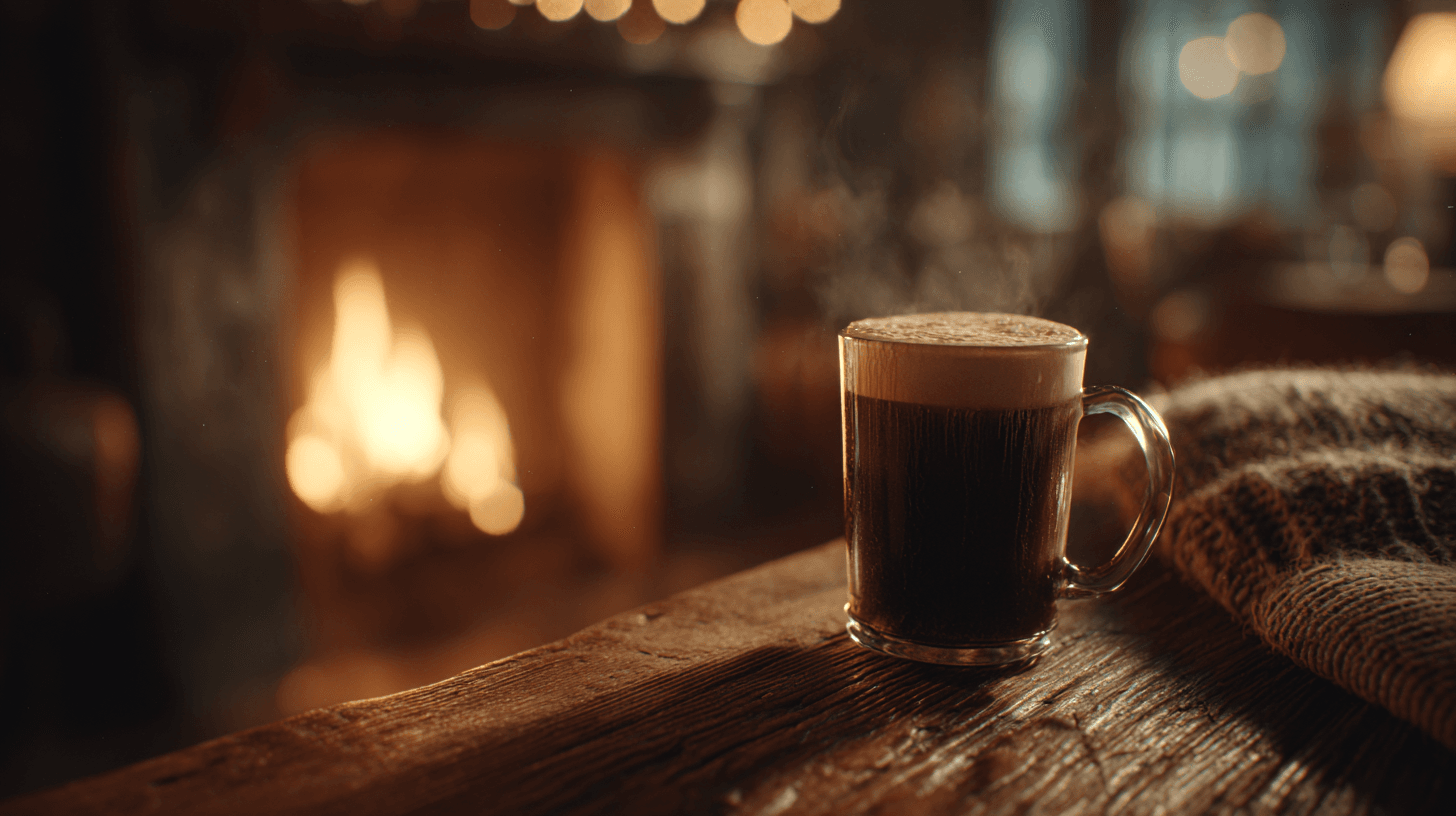
Authentic Irish Coffee
Ingredients
Equipment
Method
- Fill your glass with hot water to preheat it, then discard the water.
- Pour the hot coffee into the warmed glass until it is about 3/4 full.
- Add the brown sugar and stir until completely dissolved in the coffee.
- Pour in the Irish whiskey and stir briefly to combine.
- Gently pour the lightly whipped cream over the back of a spoon so it floats on top of the coffee. Do not stir.
Notes
The Cream: The Most Delicate of Irish Coffee Ingredients
The white collar of the Irish Coffee is its most iconic feature. However, this is the stage where most errors occur. When sourcing irish coffee ingredients, you must buy Heavy Cream (or Double Cream in the UK/Ireland) with a fat content of over 36%.
Why Milk and Half-and-Half Fail
Milk, half-and-half, or light cream simply do not have the fat structure required to float effectively or to provide the necessary mouthfeel. They will mix with the hot coffee instantly, turning the drink a murky beige. The visual contrast of black and white is the signature of high-quality irish coffee ingredients.
The Aeration Technique
The cream must be fresh and cold. Crucially, it must be “lightly whipped” or aerated. It should still be pourable—think of the consistency of thick paint or melted ice cream. If you whip it too much (to stiff peaks), you get a dollop of dessert topping that acts as a lid. The drinker should be able to sip the hot coffee through the cold cream. This interaction of hot liquid and cold fat is the sensory masterpiece of the drink.
To prepare this part of your irish coffee ingredients, place the cold cream in a shaker or a bowl and whisk vigorously for about 30-60 seconds. You want to introduce air bubbles to thicken it slightly, but stop before it holds a shape.
Glassware and Presentation
While not an edible item, the vessel is inextricably linked to the irish coffee ingredients. The standard vessel is a 6-to-8-ounce stemmed glass made of heat-resistant glass (tempered). The stem is important because it allows the drinker to hold the glass without burning their hand on the hot coffee reservoir.
A “toddy” glass with a handle is acceptable, but the stemmed goblet is traditional. Before assembling your irish coffee ingredients, you must pre-heat the glass with boiling water. This serves two purposes: it prevents the glass from shattering due to thermal shock, and it keeps the drink hot longer. Pouring hot coffee into a cold glass is a rookie mistake that will cool your beverage instantly.
What to Serve With irish coffee ingredients: Perfect Pairings
To make the most of this recipe, consider pairing it with these favorites from our collection:
Step-by-Step Assembly Using Your Irish Coffee Ingredients
Now that you have sourced the finest irish coffee ingredients, the assembly requires precision. Follow this order of operations to ensure the layers remain distinct and the flavors balanced.
- Prepare the Glass: Fill your tempered glass with boiling water and let it sit for 1 minute to heat up. Discard the water.
- Add the Sweetener: Add 2 teaspoons of brown sugar (or 0.5 to 0.75 oz of rich Demerara syrup) to the bottom of the warm glass.
- Add the Coffee: Pour in roughly 4 ounces of freshly brewed, hot, strong coffee. Do not fill the glass to the brim; leave about an inch of space for the remaining irish coffee ingredients.
- Dissolve: If using granulated sugar, stir vigorously until completely dissolved. This creates the dense base layer.
- Add the Whiskey: Pour in 1.5 ounces of Irish whiskey. Stir gently to combine with the sweetened coffee.
- The Float: Take a warm teaspoon and hold it upside down (convex side up) over the glass, with the tip just touching the surface of the coffee. Slowly pour the lightly aerated heavy cream over the back of the spoon. The spoon disperses the flow, preventing the cream from plunging into the coffee.
- Serve: Do not stir the drink after adding the cream. Serve immediately.
Troubleshooting Common Issues with Irish Coffee Ingredients
Even with the best irish coffee ingredients, things can go wrong. Here is how to fix common problems.
The Cream Sinks
If your cream sinks into the coffee rather than floating, it usually stems from one of two issues regarding your irish coffee ingredients:
- Not Enough Sugar: The coffee layer wasn’t dense enough. Add more sugar to the coffee base next time.
- Cream Too Thin: You didn’t whip the cream enough. Give it a few more seconds of vigorous whisking to trap more air bubbles, which helps buoyancy.
- Cream Too Warm: Cold cream floats better on hot coffee due to temperature-related density differences. Keep your cream in the fridge until the very last second.
The Drink is Lukewarm
This is often caused by the whiskey or the glass. Whiskey at room temperature can significantly cool down 4 ounces of coffee. Ensure your glass is thoroughly pre-heated. Some bartenders also briefly heat the whiskey (be careful not to boil off the alcohol), but with a properly heated glass and piping hot coffee, this shouldn’t be necessary.
The Coffee Tastes Weak
Remember that you are diluting the coffee with whiskey and cream. When measuring your irish coffee ingredients, brew the coffee at a higher ratio (more grounds per cup water) than you typically would for breakfast coffee. It needs the backbone to punch through the fat of the cream and the alcohol.
Frequently Asked Questions About Irish Coffee Ingredients
Can I use Decaf Coffee?
Absolutely. The caffeine content does not affect the structural integrity or the flavor profile significantly. Using a high-quality Swiss Water Process decaf ensures that the flavor notes remain intact, allowing you to enjoy irish coffee ingredients late in the evening without disrupting sleep.
Is Instant Coffee Acceptable?
Technically, yes, but it is highly discouraged. Instant coffee lacks the body, oils, and aromatic complexity of brewed coffee. Since there are so few irish coffee ingredients, the quality of each is magnified. Using instant coffee will result in a thin, flat-tasting cocktail.
Can I make a Vegan Irish Coffee?
Yes, but the cream element becomes tricky. Standard almond or soy milk will not float and may curdle due to the acidity of the coffee and heat. For the best vegan irish coffee ingredients, use full-fat coconut cream (the thick layer from a can of coconut milk) or a dedicated barista-blend oat milk that has been whipped. Note that coconut will impart a distinct flavor profile.
What about nutmeg?
A dusting of freshly grated nutmeg on top of the cream is a traditional garnish for many irish coffee ingredients lists. It adds a wonderful aromatic dimension that greets the nose before the liquid hits the lips. While not strictly mandatory, it is highly recommended for a professional finish.
Conclusion
Mastering the Irish Coffee is an exercise in restraint and respect for raw materials. It is not about adding bells and whistles, but about sourcing the highest quality irish coffee ingredients and treating them with care. From the triple-distilled smoothness of the whiskey to the thermal dynamics of the cream float, every element plays a specific role in the final experience.
By ensuring you have the correct brown sugar for density, the right roast of coffee for depth, and properly aerated heavy cream for texture, you elevate a simple hot drink into a luxurious cocktail. Whether you are warming up after a winter walk or capping off a fine dinner, the perfect combination of these irish coffee ingredients offers a timeless comfort that few other beverages can match. For more culinary history and beverage science, consider visiting Encyclopaedia Britannica.
Now that you possess the knowledge of the ultimate irish coffee ingredients, it is time to brew, pour, and enjoy.