
Hibachi vegetables are the cornerstone of the Japanese steakhouse experience, providing a savory, caramelized, and texture-rich accompaniment to grilled meats. While the theatrics of the chef flipping utensils and creating onion volcanoes draw the crowds, it is the distinctive flavor of the vegetables seared quickly over high heat that keeps diners coming back. Recreating this specific flavor profile at home requires understanding the interplay of heat, timing, and the right ingredients.
This comprehensive guide will explore the art of preparing hibachi vegetables without the need for an industrial teppanyaki grill. We will delve into the science of high-heat searing, the selection of premium ingredients, and specifically how to utilize beef-based fats to achieve a depth of flavor that far surpasses traditional pork-based cooking fats often used in other cuisines. By adhering to a strict standard of alcohol-free and pork-free preparation, we ensure a clean, robust flavor profile suitable for everyone.
Table of Contents
The Allure of Hibachi Style Cooking
The term “hibachi” in North America typically refers to teppanyaki cooking, which involves grilling food on a large, flat iron plate. The magic of hibachi vegetables lies in the Maillard reaction. This chemical reaction between amino acids and reducing sugars gives browned food its distinctive flavor. Unlike steaming or boiling, hibachi cooking relies on conductive heat to sear the exterior of the vegetables while keeping the interior crisp-tender.
The result is a vegetable medley that retains its structural integrity but carries a smoky, buttery, and savory coating. The standard mix usually involves zucchini, onions, and mushrooms, though carrots, broccoli, and snap peas are frequent additions. The key is not just the heat, but the fat used to conduct that heat. In this guide, we emphasize the use of beef derivatives and high-quality oils to create a rich, umami-packed experience without relying on pork products or alcohol-based deglazers.
Selecting the Best Ingredients for Hibachi Vegetables
To replicate the steakhouse standard, the quality of your produce is paramount. Hibachi vegetables rely on freshness because the cooking time is short. Old or withered vegetables will release too much water and turn mushy rather than caramelizing.
The Holy Trinity: Zucchini, Onions, and Mushrooms
Zucchini: Look for firm, dark green zucchini without blemishes. Smaller to medium-sized zucchini tend to have fewer seeds and less water content, which is crucial for achieving a good sear. The goal is to brown the vegetable, not steam it in its own juices.
Onions: Sweet onions, such as Vidalia or Walla Walla, are the preferred choice for hibachi vegetables. Their high sugar content aids in caramelization, turning golden brown and sweet when exposed to the high heat of the griddle. Red onions can be used for color, but sweet onions provide that authentic restaurant flavor.
Mushrooms: White button mushrooms are the traditional choice. They act as sponges, absorbing the garlic butter, soy, and beef juices. Cremini mushrooms (baby bellas) are an excellent alternative if you prefer a deeper, earthier flavor profile. Ensure they are wiped clean with a damp cloth rather than soaked in water to prevent them from becoming rubbery.
Secondary Vegetables
While the trinity is essential, adding variety enhances the visual appeal and nutritional value of your hibachi vegetables. Broccoli florets add a crucial crunch, while carrot batons provide natural sweetness and a pop of orange color. Mung bean sprouts are often added at the very end of cooking for a refreshing crispness.
The Beef Advantage: Why Beef Tallow Beats Pork Fat
In many stir-fry traditions, pork lard or bacon grease is used to add savory depth. However, for a truly robust, premium flavor profile and to keep our kitchen strictly pork-free we turn to the superior qualities of beef.
Beef Tallow vs. Pork Lard
Beef tallow (rendered beef fat) has a higher smoke point than butter and a distinctively rich flavor that pairs perfectly with the soy and garlic notes of hibachi cooking. When you dine at a steakhouse, the vegetables are often cooked on the same surface as the steaks, absorbing the rendered fat from cuts like Ribeye or New York Strip. This cross-flavoring is the secret ingredient that is often missing from home preparations.
Incorporating Beef Products
If you cannot find ready-made beef tallow, you can render your own from beef trimmings. Alternatively, if a recipe calls for a salty, cured meat element like bacon to start the vegetable base, you must utilize Beef Bacon. Beef bacon, made from the plate cut, offers a smoky, salty punch that mimics traditional bacon but with a deeper, meatier finish that complements the mushrooms and onions beautifully. Cooking your hibachi vegetables in the rendered fat of beef bacon creates a foundation of flavor that oil alone cannot achieve.
Essential Equipment for Home Chefs
You do not need a restaurant-sized teppanyaki table to make excellent hibachi vegetables, but having the right tools helps replicate the heat distribution.
The Cooking Surface
Electric Griddle: This is the closest home alternative to a restaurant flat-top. It provides a large surface area, allowing you to cook the vegetables in a single layer without crowding. Crowding leads to steaming, which kills the sear.
Large Cast Iron Skillet: If a griddle isn’t available, a 12-inch or larger cast iron skillet is the best backup. Cast iron retains heat exceptionally well, which is necessary for searing vegetables quickly.
The Wok: While traditional hibachi is done on a flat surface, a carbon steel wok is excellent for home cooks because it allows for high-heat tossing. The “wok hei” (breath of the wok) can simulate the smoky flavor of the grill.
Utensils
Two large, flat metal spatulas are standard. These allow you to toss, flip, and chop the vegetables effectively. A sharp knife is also critical for consistent prep work.
For more on the science of cooking surfaces and heat retention, you can refer to resources like Serious Eats’ Guide to Cooking Fats and Heat.
Preparation Techniques for Uniform Cooking
Consistency in cutting is vital for hibachi vegetables. If pieces are uneven, small chunks will burn before larger pieces are tender.
The Zucchini Baton
The signature cut for hibachi zucchini is the baton. Slice the zucchini lengthwise, then cut those halves into thick strips, and finally cross-cut them into rectangular batons. This shape provides four flat sides, maximizing the surface area available for searing.
Onion Petals vs. Slices
Instead of dicing onions, cut them into large petals or thick slices. Large petals hold up better under high heat and provide a substantial bite that contrasts nicely with the softer mushrooms.
Mushroom Slicing
Mushrooms should be sliced relatively thick (about 1/4 inch). If sliced too thin, they will shrivel instantly. Thicker slices allow the mushroom to brown on the outside while remaining juicy inside.
The Alcohol-Free Flavor Foundation
Traditional Japanese cooking often utilizes Sake (rice wine) or Mirin (sweet rice wine) to deglaze pans and add sweetness. To maintain a strictly alcohol-free kitchen while achieving the same complex flavor profile, we use specific substitutes that mimic the acidity and sweetness without the fermentation byproducts.
Substituting Sake and Mirin
To replace the acidity and depth of Sake, use a high-quality Rice Vinegar diluted with a savory Beef Broth. The beef broth provides the umami backbone, while the vinegar cuts through the fat.
To replace Mirin, which adds glaze and shine, mix Apple Juice or White Grape Juice with a small amount of sugar and lemon juice. This combination provides the necessary fructose to aid in caramelization and the glossy finish typical of hibachi vegetables, with zero alcohol content.
The Garlic Butter Component
Garlic butter is the lifeblood of hibachi vegetables. To make this at home, whip unsalted butter with roasted garlic paste and a pinch of soy sauce. For an even richer, beef-forward version, blend softened butter with a teaspoon of rendered beef tallow.
Step-by-Step Guide to Cooking Hibachi Vegetables
Now that the prep is done, the cooking process moves fast. Mise en place (having everything in place) is essential.
Step 1: Heating the Surface
Preheat your griddle or skillet to medium-high heat. You want the surface hot enough that a drop of water sizzles and evaporates immediately. Add your fat source preferably beef tallow, beef bacon grease, or high-heat vegetable oil mixed with a pat of butter.
Step 2: The Hard Vegetables First
If you are using carrots or broccoli, start them first as they take longer to cook. Add them to the hot surface. You may need to add a splash of beef broth and cover them with a metal dome or lid for 1-2 minutes to steam-cook the centers before searing.
Step 3: The Main Trio
Add the onions and zucchini batons. Spread them out in a single layer. Do not touch them for at least 60-90 seconds. This patience allows the crust to form. Once browned, toss them vigorously.
Step 4: Adding Mushrooms and Butter
Add the mushrooms last, as they cook quickly. At this stage, introduce your garlic butter (or beef-butter blend). As the butter melts, toss the vegetables so they are evenly coated.
Step 5: Seasoning and Deglazing
Drizzle with soy sauce and your alcohol-free “mirin” substitute (apple juice/vinegar blend). Season with freshly cracked black pepper and sesame seeds. The liquids will bubble violently this is good. Tumble the vegetables through the bubbling sauce to glaze them. Remove from heat immediately to prevent overcooking.
Sauce Mastery: The Magic of Yum Yum and Ginger
Hibachi vegetables are often served with dipping sauces. Here is how to make them strictly alcohol-free and pork-free.
Alcohol-Free Yum Yum Sauce
This creamy, pink sauce is a mayonnaise-based favorite.
Ingredients: 1 cup Mayonnaise (ensure no vinegar derived from wine), 1 tsp Tomato paste, 1 tbsp Melted Butter, 1 tsp Sugar, 1/2 tsp Paprika, 1/2 tsp Garlic powder, 2 tbsp Water to thin.
Method: Whisk all ingredients together. Let it sit in the refrigerator for at least 2 hours to let the flavors meld. This sauce provides a creamy richness that cuts through the savory, salty vegetables.
Ginger Dipping Sauce
A sharper, zestier sauce usually served with vegetables and seafood.
Ingredients: 1/4 cup Onion (blended), 2 tbsp Fresh Ginger (blended), 1/4 cup Soy Sauce, 1/4 cup Rice Vinegar, 1 tbsp Lemon Juice, Zest of 1 Lemon.
Method: Blend the onion and ginger until smooth. Mix with liquids. This sauce offers a bright acidity that cleanses the palate between bites of rich, butter-coated vegetables.
Perfect Pairings from TheWorldBites
Complete your meal with these tried-and-tested favorites from our collection:
While hibachi vegetables are indulgent due to the butter and oil, they remain a nutritious component of the meal. The quick cooking time preserves many of the vitamins that are otherwise lost in boiling.
- Zucchini: Rich in antioxidants like lutein and zeaxanthin, which are beneficial for eye health. It is also low in carbohydrates, making it keto-friendly.
- Onions: contain quercetin, a flavonoid antioxidant that may help lower blood pressure.
- Mushrooms: Are one of the few non-animal sources of B vitamins and Selenium, which supports the immune system.
By using beef tallow, you are also incorporating natural conjugated linoleic acid (CLA), a fat associated with various health benefits. For detailed nutritional data on vegetable cooking methods, consult the USDA Agricultural Research Service.
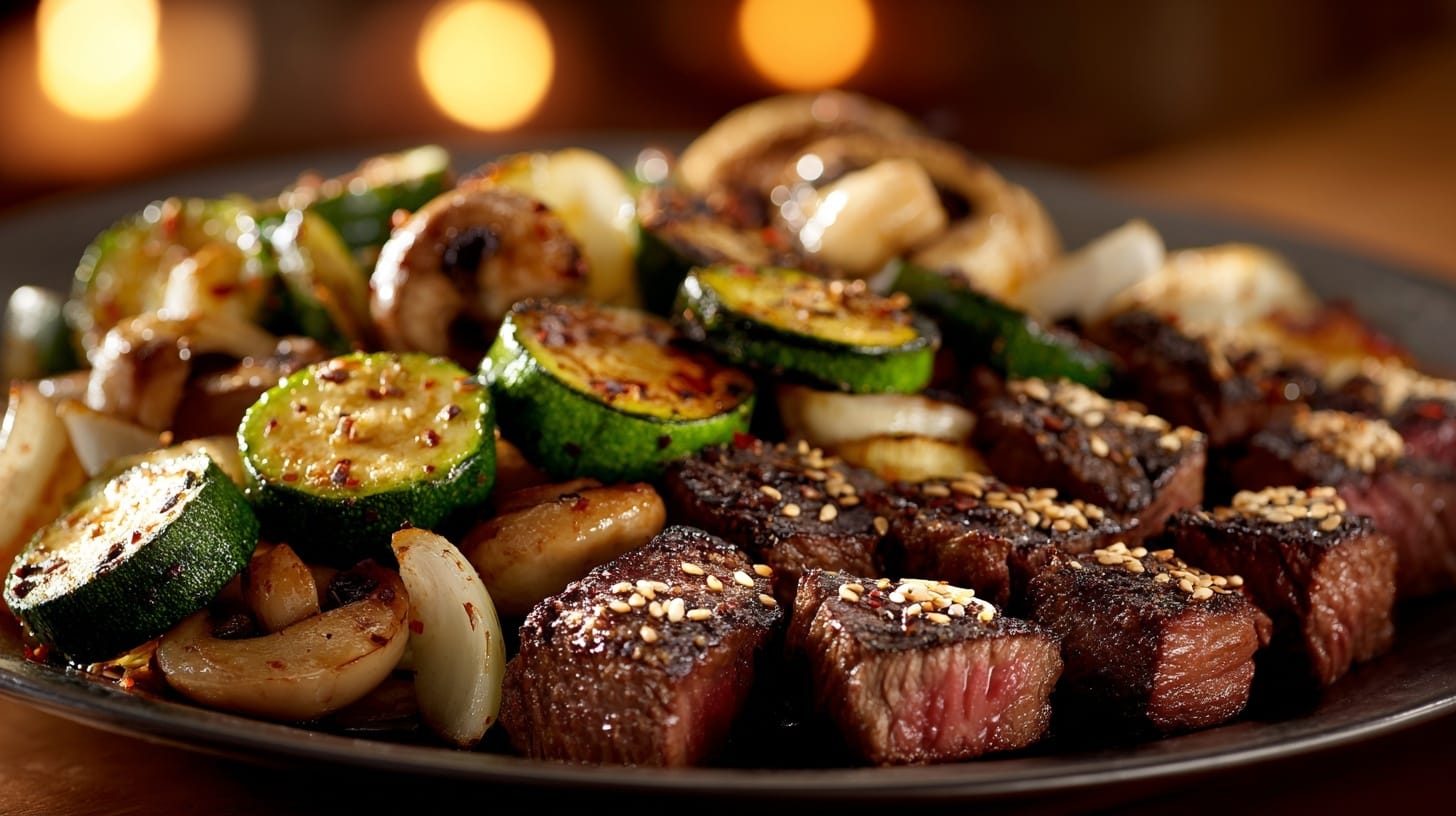
Restaurant-Style Hibachi Vegetables
Ingredients
Method
- In a small bowl, whisk together the soy sauce, rice vinegar, sugar, and minced garlic. Set aside.
- Heat a large skillet or flat-top griddle over high heat. Add the vegetable oil and 1 tablespoon of butter.
- Once the butter is melted and sizzling, add the onions and zucchini. Sauté for 3-4 minutes, stirring occasionally, until the edges are slightly charred.
- Add the mushrooms and the remaining tablespoon of butter. Continue to sauté for another 3 minutes until the mushrooms are tender.
- Pour the soy sauce mixture over the vegetables. Toss rapidly for 1 minute until the sauce thickens and glazes the vegetables.
- Remove from heat, drizzle with sesame oil, and serve immediately alongside your favorite beef dish.
Chef’s Pro Tips for Success
To elevate your hibachi vegetables from “good” to “restaurant quality,” keep these professional tips in mind.
Dry Your Vegetables
After washing your produce, ensure it is thoroughly dried. Water is the enemy of the sear. If your vegetables are wet, the temperature of the pan drops, and the water turns to steam. This results in gray, soggy vegetables rather than brown, crisp ones. Use a salad spinner or paper towels to remove all surface moisture.
2. The Sesame Oil Finish
Toasted sesame oil has a low smoke point and can turn bitter if heated for too long. Do not cook with it from the start. Instead, drizzle a small amount over the hibachi vegetables right as you pull them off the heat. This preserves the delicate, nutty aroma.
3. Managing Salt Levels
Soy sauce, beef broth, and butter all contain salt. Taste your food as you cook. It is easy to over-salt hibachi dishes. If you are using salted butter or beef bacon grease, reduce the amount of soy sauce you add at the end.
4. High Heat, Short Time
Fear of burning often causes home cooks to lower the heat. Trust the process. High heat is necessary to replicate the teppanyaki experience. Keep the food moving once the initial sear is achieved, and the food will not burn.
5. Beef Fat Rendering
If you are trimming a brisket or a steak for another meal, save the hard white fat. Freezing it and then dicing it makes it easy to render down in a pan to create liquid gold (tallow) for your vegetables. This utilizes the whole animal and provides a superior flavor to vegetable oil.
For more on food safety when handling meats and vegetables together, refer to the FDA Safe Food Handling Guidelines.
Conclusion
Mastering hibachi vegetables at home is an exercise in heat management and timing. By stripping away alcohol and pork products and leaning into the rich, savory profile of beef fats and fresh produce, you can create a side dish that rivals any Japanese steakhouse. The combination of caramelized onions, tender zucchini, and earthy mushrooms glazed in a soy-garlic-butter sauce transforms simple vegetables into a culinary highlight.
Remember that the secret lies in the details: drying your vegetables, using a large cooking surface to avoid crowding, and utilizing beef tallow or beef bacon grease for that signature depth of flavor. Whether you are serving this alongside a seared steak, grilled chicken, or enjoying it as a robust vegetarian main course, these hibachi vegetables bring the excitement and flavor of the teppanyaki grill right into your kitchen.