
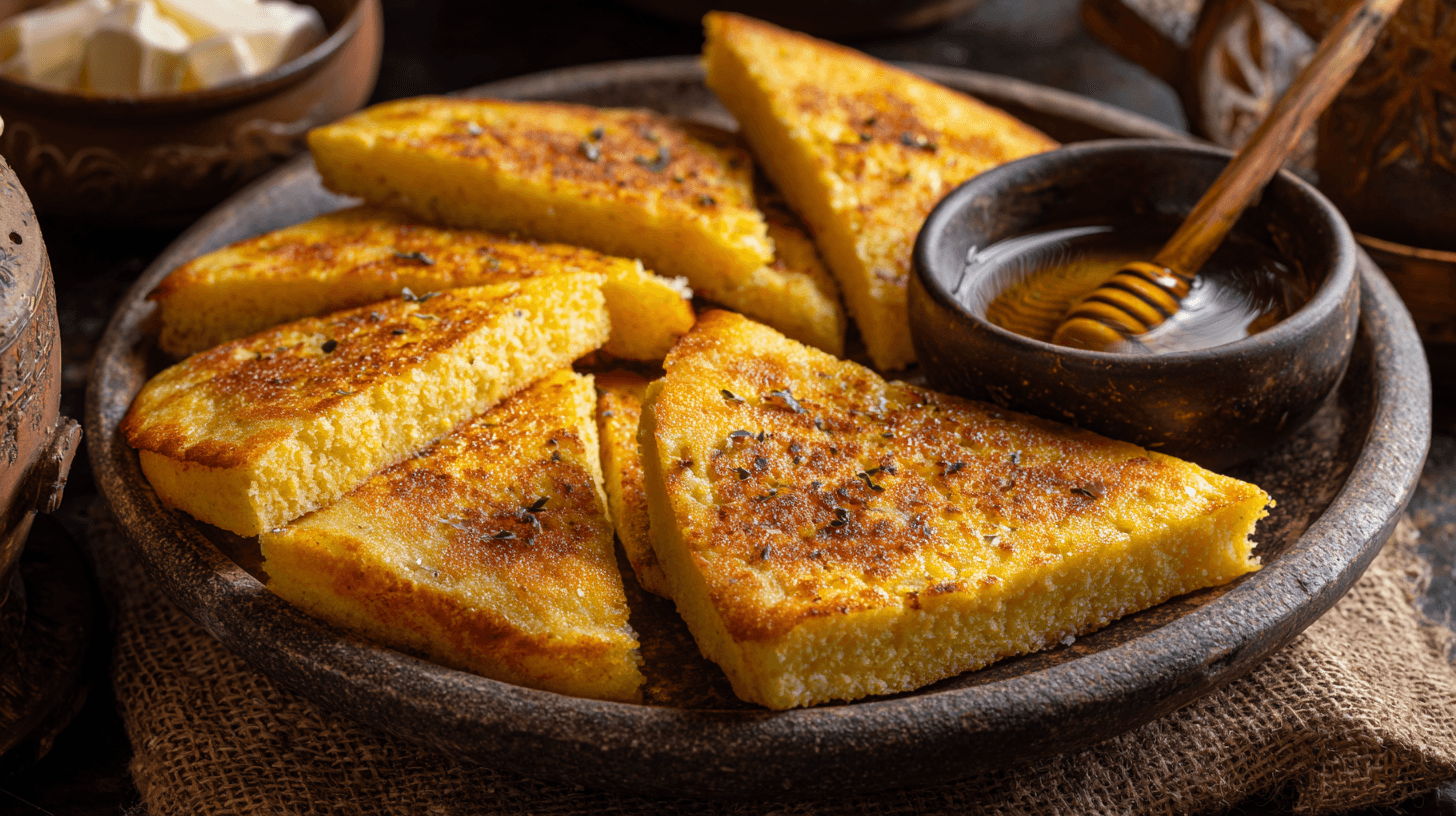
Moroccan harcha is one of those quietly magical recipes that transforms humble pantry staples into something deeply comforting. Made with fine semolina, butter, and milk, this traditional Moroccan flatbread is pan-cooked until golden and crisp on the outside, while remaining tender and slightly crumbly inside. If you’ve ever sat down for Moroccan breakfast or afternoon tea, chances are you’ve enjoyed warm harcha drizzled with honey or spread with melted butter.
In this guide, you’ll learn exactly how to make authentic Moroccan harcha at home, with chef-tested tips, substitutions, and troubleshooting advice so your harcha turns out perfect every time even if it’s your first attempt.
Table of Contents
What Is Moroccan Harcha?
Moroccan harcha is a pan-fried semolina flatbread traditionally enjoyed for breakfast or during afternoon tea (known as atay). Unlike yeast breads, harcha relies on baking powder for lightness, resulting in a dense yet tender crumb. Its rustic texture and buttery aroma make it uniquely satisfying.
Harcha is especially popular in urban homes across Morocco, often served alongside mint tea, amlou, or simple honey and butter.
Ingredients You’ll Need
- 2 cups (320 g) fine semolina (not semolina flour)
- 1/4 cup (50 g) granulated sugar
- 1 tablespoon baking powder
- 1/2 teaspoon salt
- 1/2 cup (113 g) unsalted butter, melted
- 3/4 cup (180 ml) milk, room temperature
- Extra semolina for coating
Authentic Moroccan Harcha Recipe
Prep Time: 10 minutes
Cook Time: 15 minutes
Total Time: 25 minutes
Servings: 6 wedges
Calories: ~280 per serving
Instructions
- In a large bowl, combine the fine semolina, sugar, baking powder, and salt. Mix well to evenly distribute the leavening.
- Pour in the melted butter and rub it into the semolina mixture using your fingertips until it resembles damp sand.
- Gradually add the milk, mixing gently just until a soft, cohesive dough forms. Do not knead.
- Let the dough rest for 5 minutes to allow the semolina to absorb the liquid.
- Shape the dough into a disc about 1 inch thick. Coat lightly with extra semolina on both sides.
- Heat a nonstick skillet over low heat. Cook the harcha for 6–8 minutes per side, flipping carefully, until golden brown and cooked through.
- Transfer to a wire rack and cool slightly before cutting into wedges.
Substitutions & Dietary Swaps
- Dairy-Free: Use plant-based butter and almond or oat milk.
- Lower Sugar: Reduce sugar to 2 tablespoons or omit for a savory version.
- Whole Grain: Substitute half the semolina with whole wheat semolina.
Chef’s Pro Tips
- Always cook harcha over low heat to prevent burning.
- Fine semolina is essential coarse semolina will result in a gritty texture.
- Letting the dough rest improves tenderness.
Make Ahead, Storage & Reheating
Moroccan harcha can be made a day ahead and stored in an airtight container at room temperature for up to 24 hours. For longer storage, refrigerate for up to 3 days. Reheat gently in a skillet or toaster oven to restore its crisp exterior.
Troubleshooting & Common Mistakes
- Too dry: Add milk one tablespoon at a time.
- Burning outside: Lower the heat and cook more slowly.
- Crumbly texture: Ensure accurate measurements and avoid overmixing.
Flavor Pairings & Serving Suggestions
Serve Moroccan harcha warm with honey and butter, or pair it with Moroccan mint tea. For a savory Fluffy German Pancake Recipe.
Moroccan Harcha (Semolina Flatbread)
Ingredients
Equipment
Method
- In a large bowl, whisk together the fine semolina, sugar, baking powder, and salt.
- Add the melted butter and rub it into the semolina mixture with your fingertips until it looks like damp sand.
- Pour in the milk gradually, mixing gently just until a soft, cohesive dough forms. Do not knead.
- Rest the dough for 5 minutes so the semolina can hydrate.
- Shape the dough into a 1-inch-thick disc (or divide into smaller rounds). Coat both sides lightly with extra semolina.
- Heat a nonstick skillet over low heat. Cook for 6–8 minutes per side, flipping carefully, until deep golden and cooked through.
- Transfer to a rack, cool slightly, then slice into wedges. Serve warm with honey and butter.
Notes
FAQs
Is Moroccan harcha the same as cornbread?
No. Although both use coarse grains, harcha is made from semolina wheat, not corn.
Can I bake harcha instead of pan-frying?
Traditionally it’s pan-cooked, but baking at 375°F (190°C) for 20–25 minutes is possible.
Why did my harcha crack?
Cracking usually means the dough was too dry or overcooked on high heat.
Can harcha be frozen?
Yes. Freeze cooked harcha wedges for up to 2 months and reheat directly from frozen.
Is semolina healthy?
Semolina is a good source of protein and B vitamins. Learn more from the U.S. Department of Agriculture.
Conclusion
Moroccan harcha is proof that simple ingredients, treated with care, can produce extraordinary results. Whether you’re recreating a Moroccan breakfast at home or exploring new global flavors, this comforting semolina flatbread deserves a spot in your kitchen rotation. Try it once, and it’s sure to become a favorite.
For more North African classics, explore our collection of Moroccan bread recipes and bring the warmth of Moroccan cooking into your home.
External reference: U.S. Department of Agriculture – Grains and Semolina Nutrition: https://www.usda.gov