Ingredients
Equipment
Method
- Make the custard: In a saucepan, whisk the milk, sugar, and cornstarch until completely smooth.
- Cook over medium heat, stirring constantly, until the mixture thickens into a glossy custard (it should coat a spoon).
- Remove from heat and stir in the orange blossom water. Press plastic wrap directly onto the surface and let cool until warm (not hot).
- Prepare the pastry: Lightly brush your large nonstick skillet/pan with melted butter. Lay down a sheet of warqa (or phyllo), letting the edges overhang the pan. Brush lightly with butter. Repeat with 3–4 sheets.
- Spread a thin layer of custard over the pastry, then sprinkle a layer of crushed toasted almonds. Add another 2–3 butter-brushed sheets and repeat the custard + almonds layering until you’ve used most of the custard (aim for 2–3 custard layers).
- Finish and seal: Top with 2–3 final butter-brushed sheets. Fold the overhanging edges inward to form a neat round. Brush the top lightly with butter.
- Cook on low to medium-low heat until the bottom is deeply golden and crisp. Flip carefully using a large plate (or wide spatula), then cook the second side until golden.
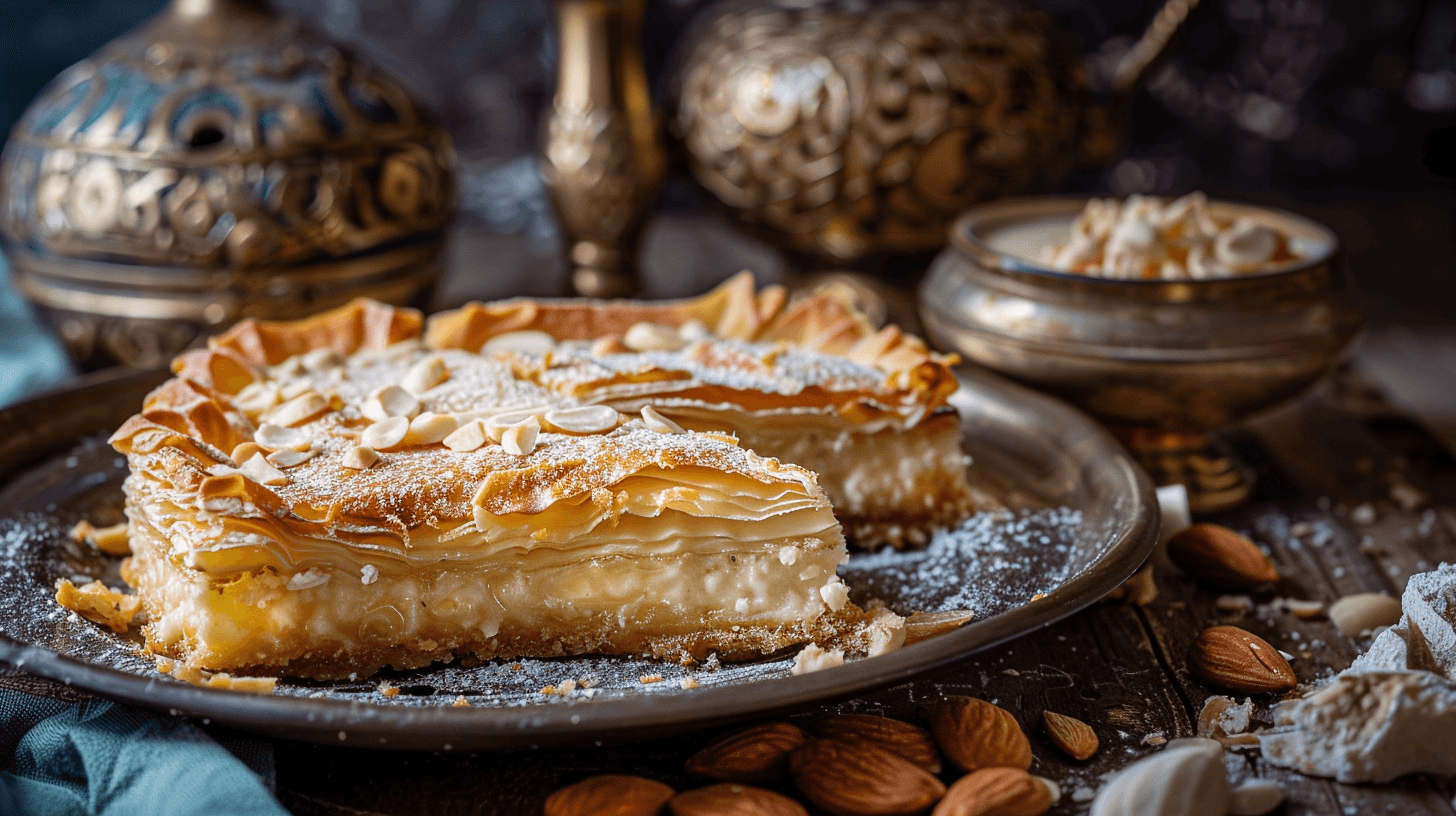
- Serve: Slide onto a platter. Dust generously with powdered sugar and finish with cinnamon (classic Moroccan crisscross or stripes).
Notes
Jawhara is best the day it’s made for maximum crispness. If using phyllo, use fewer sheets per layer than you would for baklava—Jawhara should feel light and airy. Let the custard cool until warm so it doesn’t steam the pastry and turn layers soggy.