
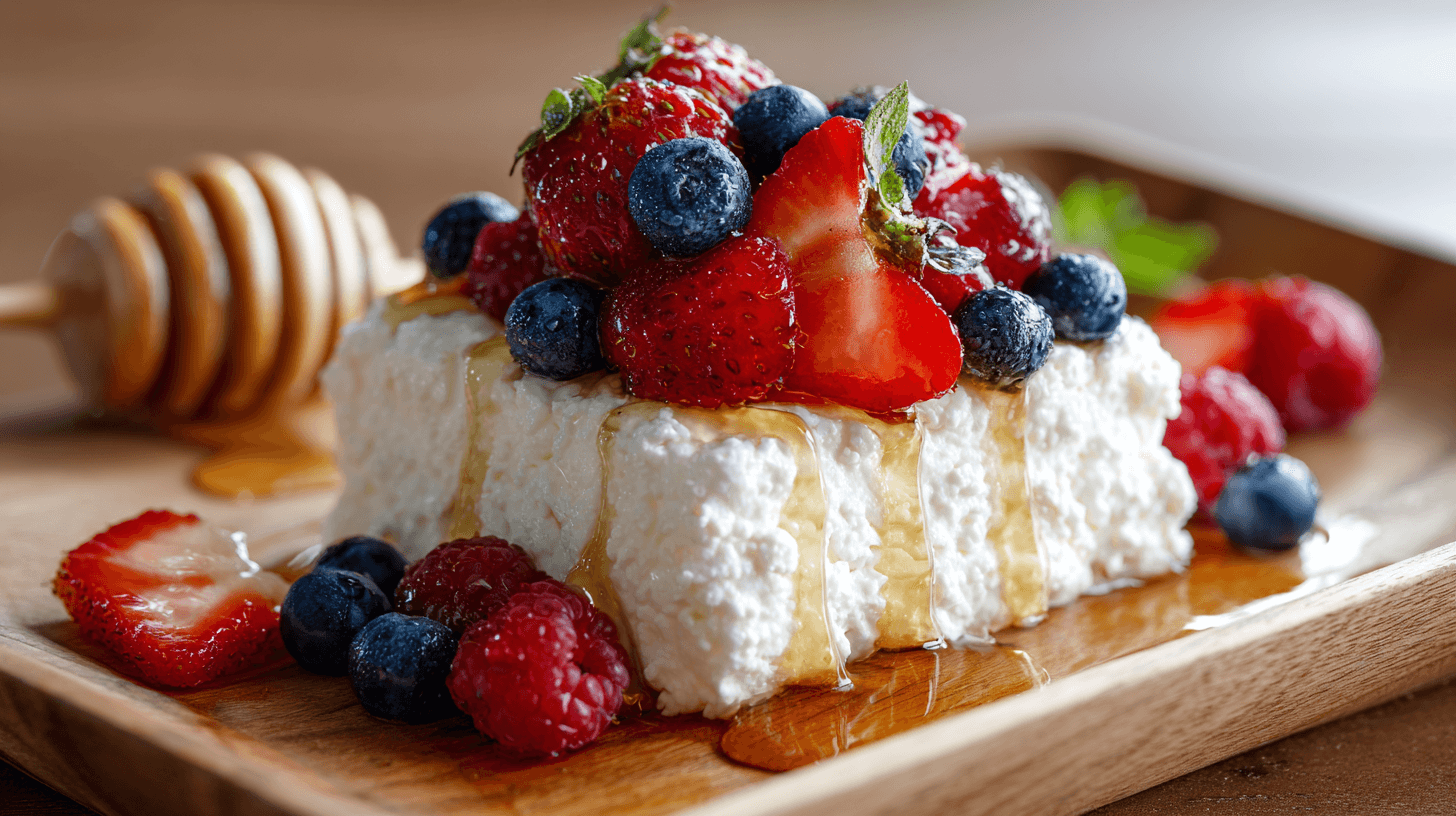
There’s something deeply satisfying about making your own cottage cheese recipe at home, a creamy, protein-rich staple that transforms simple milk into something extraordinary. Whether spread on toast, stirred into pancakes, or spooned alongside fresh fruit, homemade cottage cheese offers a freshness and texture no store-bought version can match. This easy guide walks you through each step to create your own batch of velvety curds with just a few simple ingredients.
Table of Contents
Homemade Cottage Cheese Recipe
Prep Time: 5 minutes
Cook Time: 30 minutes
Total Time: 35 minutes
Yield: 2 cups
Calories: 120 per ½ cup serving
Ingredients
- 1 gallon whole milk (not ultra-pasteurized)
- ¼ cup white vinegar or lemon juice
- ½ teaspoon salt (adjust to taste)
- ½ cup heavy cream (optional, for creamy texture)
Instructions
- Heat the milk: Pour milk into a large pot and heat slowly over medium heat until it reaches about 190°F (just before boiling).
- Add the acid: Turn off the heat and stir in vinegar or lemon juice. You’ll see the milk curdle and separate into curds and whey.
- Let it rest: Cover the pot and let the mixture sit undisturbed for 10 minutes.
- Strain the curds: Line a colander with cheesecloth and pour the mixture through it. Let it drain for about 5 minutes.
- Rinse: Rinse the curds gently under cool water to remove any acidic taste.
- Season: Transfer curds to a bowl, sprinkle with salt, and stir lightly.
- Optional creaminess: For rich cottage cheese, fold in the heavy cream until your desired consistency is reached.

Substitutions & Dietary Swaps
- Low-Fat Option: Use 2% or skim milk for a lighter version (texture will be less creamy).
- Dairy-Free: Try using soy milk or almond milk with added lemon juice, note that curds will be softer and yield will vary.
- No Vinegar: Lemon juice works perfectly for a natural tang.
- Low-Sodium: Reduce or omit salt and use herbs for flavor instead.
Chef’s Pro Tips
- Use whole milk for the creamiest results, higher fat content creates softer curds.
- Do not boil the milk; heating too quickly can cause tough curds.
- For small curds, stir during the acid addition; for large curds, let the milk sit still.
- Adding the cream after cooling gives that classic rich, creamy cottage cheese texture.
- Save the whey! It’s great for baking or smoothies.
Make Ahead, Storage & Reheating
Store homemade cottage cheese in an airtight container in the refrigerator for up to 4–5 days. Stir before serving as natural separation can occur. For best texture, avoid freezing as it may turn grainy when thawed. To warm slightly, let it sit at room temperature for 10–15 minutes before eating.
Troubleshooting & Common Mistakes
- Curds not forming? Check your milk’s temperature, if too low, the acid won’t separate it properly.
- Too tangy? Use less acid next time or rinse the curds more thoroughly.
- Rubbery texture? You may have overheated the milk or stirred too vigorously.
- Bland taste? Don’t be afraid to season with salt or fold in fresh herbs.
Flavor Pairings & Serving Suggestions
This cottage cheese recipe shines both sweet and savory. Enjoy it with fresh berries and honey for breakfast, or serve with cracked pepper, tomatoes, and olive oil for a Mediterranean twist. It’s also excellent blended into pancake batter, stirred into scrambled eggs, or dolloped over baked potatoes.
Pairing Recipes From Our Website
FAQs
Can I use raw milk? Yes, but heat it first to 190°F for safety and consistency. What can I do with leftover whey? Use it in smoothies, soups, or bread dough for extra protein and flavor. Can I make cottage cheese without a thermometer? Yes , heat until small bubbles form around the edge of the pot, not boiling. How can I make it creamier? Stir in more cream or milk after cooling until you reach your desired texture. Why is my cottage cheese dry? It may have drained too long. Next time, reduce the strain time slightly. Can I add flavors to it? Absolutely! Try adding chopped chives, dill, or even fruit purees.

Conclusion
This easy cottage cheese recipe gives you full control over flavor, texture, and freshness. In under an hour, you can create a protein-packed, creamy staple perfect for any meal of the day. Once you taste homemade cottage cheese, you’ll never want to go back to store-bought again.
For more food safety and dairy handling tips, visit the USDA Food Safety