
French Onion soup is widely regarded as one of the most comforting, savory, and sophisticated dishes in the culinary world. It is a masterpiece of patience, transforming humble ingredients—onions and beef stock—into a decadent bowl of deep flavors, topped with toasted bread and bubbling, melted cheese. While traditional iterations often rely on wine or spirits to deglaze the pot, this comprehensive guide focuses entirely on the purity of ingredients, utilizing rich beef stock and natural acidity from vinegars to achieve a complex flavor profile without a single drop of alcohol. Furthermore, we explore how to maximize savory depth using beef-based ingredients, ensuring a robust experience that adheres to strict non-pork dietary standards.
In this extensive guide, we will explore the chemistry of caramelization, the importance of selecting the right beef bones for your stock, and the step-by-step masterclass required to achieve the perfect bowl of French Onion soup. Whether you are a home cook looking to impress guests or a culinary enthusiast seeking to refine your technique, this article covers every nuance.
Table of Contents
The Secular History of French Onion Soup
The origins of onion soups stretch back to ancient times, largely because onions were easy to grow and abundant. However, the modern version of French Onion soup, known as “Soupe à l’Oignon,” solidified its reputation in the restaurants and markets of Paris in the 18th and 19th centuries. Historically, it was seen as a restorative dish for workers in the bustling markets of Les Halles. The heavy labor required a meal that was hot, caloric, and deeply satisfying.
What elevates the dish from a simple peasant stew to a culinary icon is the specific technique of slow-cooking onions until they reach a deep, dark brown, and then simmering them in a high-quality meat stock. In our version, we pay homage to this tradition by emphasizing the beef element. By skipping pork fats and alcohol, we return to the elemental flavors of the earth and the pasture, allowing the natural sweetness of the vegetable and the savory umami of the beef to take center stage.
The Science of Caramelization in French Onion Soup
The secret to an exceptional French Onion soup lies in the Maillard reaction. This is a chemical reaction between amino acids and reducing sugars that gives browned food its distinctive flavor. When cooking onions for this soup, you are not merely softening them; you are chemically altering their structure to create new flavor compounds.
Raw onions are sharp and pungent due to sulfur compounds. As you apply heat, these sulfur compounds break down, and the natural sugars in the onion begin to caramelize. This process cannot be rushed. High heat will burn the onions, resulting in a bitter taste known as carbonization. Low and slow heat allows the water to evaporate gradually, concentrating the sugars and turning the onions a rich, mahogany color. This base is what provides the soup with its legendary depth.
For a deeper understanding of how heat transforms food at a molecular level, you can explore resources on the Science of Cooking.
Essential Ingredients: The Beef Advantage
To create a superior French Onion soup without alcohol or pork, every ingredient must be of the highest quality. We replace common pork-based fats or toppings with superior beef alternatives to maintain a cohesive flavor profile.
1. The Onions
While you can use various types of onions, yellow onions are the gold standard for French Onion soup. They have a high sulfur content which mellows into a deep, complex sweetness that isn’t overly cloying. Sweet onions (like Vidalia) can make the soup too sugary, while red onions may result in an unappealing grayish color after long cooking. For the best texture, slice the onions pole-to-pole (root to stem) rather than across the grain; this helps them hold their shape during the long simmer.
2. The Beef Stock: The Foundation
Because we are not using wine to add body, the quality of your beef stock is paramount. A thin, watery broth will result in a lackluster soup. You want a stock rich in gelatin and collagen.
- Homemade is Best: Roasting beef knuckle and marrow bones before simmering them creates a dark, flavorful stock. The gelatin from the bones gives the soup a luxurious mouthfeel (viscosity) that mimics the body usually provided by wine.
- Store-Bought Hacks: If using store-bought beef broth, look for “bone broth” varieties which have higher protein content. You can fortify store-bought broth by simmering it with a piece of browned beef steak or additional beef bones for an hour before starting the soup.
3. The Fat: Butter and Oil
A mixture of unsalted butter and high-quality olive oil is ideal. The oil prevents the butter solids from burning during the long cooking process, while the butter adds a creamy, dairy richness that complements the beef.
4. The Acid (The Alcohol Substitute)
Traditional recipes use wine to deglaze the pan (lifting the browned bits, or “fond,” from the bottom). To achieve this without alcohol, we use vinegar. A combination of Balsamic vinegar and Apple Cider vinegar works wonders. The Balsamic adds color and a hint of sweetness, while the Apple Cider vinegar provides a sharp tang that cuts through the richness of the cheese and beef fat. This acidity is non-negotiable; without it, the soup will taste flat.
5. The Toppings: Beef Bacon and Cheese
The crouton and cheese layer (the “gratinée”) is the finishing touch.
- Bread: A dry, toasted French baguette is traditional. It must be sturdy enough to hold the cheese without disintegrating immediately into the broth.
- Cheese: Gruyère is the classic choice for its nutty flavor and superior melting qualities. Mozzarella can be used for stretch, but it lacks flavor. For a sharp kick, mix in some aged white cheddar.
- Beef Bacon (The Pork Replacement): Many rustic soups use bacon for smokiness. We strictly exclude pork. Instead, fry strips of cured Beef Bacon until shattered and crispy. Sprinkle this over the cheese before broiling, or simmer the rind in the broth for a smoky undertone.
For more information on the nutritional profile of beef and its role in a balanced diet, consult Healthline’s nutrition data.
Equipment Needed for French Onion Soup
Success in making French Onion soup often comes down to using the right tools.
- Dutch Oven or Heavy-Bottomed Pot: You need a pot that distributes heat evenly to prevent the onions from scorching in “hot spots.” Enamel-coated cast iron is ideal.
- Sharp Chef’s Knife: You will be slicing several pounds of onions. A sharp knife ensures clean cuts and reduces the release of syn-propanethial-S-oxide (the gas that makes you cry).
- Wooden Spoon: Essential for scraping up the fond from the bottom of the pot during deglazing.
- Oven-Safe Crocks: For the final broiling stage, individual ceramic ramekins or soup crocks are necessary to withstand the high heat of the broiler.
Masterclass: Step-by-Step Preparation
Follow this detailed process to create the ultimate alcohol-free, beef-forward French Onion soup.
Phase 1: Preparation
Begin by peeling and slicing 4 to 5 pounds of yellow onions. Slice them about 1/4 inch thick. If they are too thin, they will dissolve into mush; too thick, and they won’t caramelize properly. Set aside.
Phase 2: The Sweat
In your large pot, melt 4 tablespoons of butter with 2 tablespoons of olive oil over medium heat. Add the onions and toss to coat. Cover the pot for the first 15 minutes. This traps steam and helps the onions soften rapidly (“sweat”) without browning yet. This initiates the breakdown of cellular structures.
Phase 3: The Caramelization (The Long Haul)
Remove the lid and increase the heat slightly to medium-high to drive off the moisture. Stir frequently. Once the liquid has evaporated and the onions start to sizzle, lower the heat to medium-low. This is where patience is required. You must cook the onions for 45 to 60 minutes, stirring every few minutes.
You are looking for a deep, rich walnut-brown color. If the onions start to catch or burn on the bottom, add a splash of water and scrape the pot. Do not stop until the onions are thoroughly caramelized; stopping at “golden” will result in a bland soup.
Phase 4: Deglazing and Simmering
Once the onions are fully caramelized, add 1 teaspoon of fresh thyme and a bay leaf. Stir for 1 minute until fragrant. Now, add 1 tablespoon of high-quality Balsamic vinegar and 1 tablespoon of Worcestershire sauce (ensure it is a variety free of anchovies if you have seafood allergies, though standard Worcestershire is acceptable in this beef context). Scrape the bottom of the pot vigorously to lift all the flavor.
Pour in 6 to 8 cups of rich Beef Stock. Bring the mixture to a boil, then reduce heat to low. Simmer partially covered for at least 30 to 45 minutes. This allows the flavors to meld. Taste and adjust seasoning with salt and freshly cracked black pepper.
Phase 5: The Toasted Bread
While the soup simmers, slice a baguette into 1-inch thick rounds. Arrange them on a baking sheet and brush lightly with olive oil. Bake at 350°F (175°C) for 10-15 minutes until they are dry and crisp. This drying process prevents the bread from becoming a soggy mess the instant it hits the liquid.
Phase 6: The Broil
Preheat your oven’s broiler. Ladle the hot French Onion soup into oven-safe crocks, leaving about an inch of space at the top. Place one or two slices of the toasted baguette on top of the soup. Pile a generous amount of grated Gruyère cheese (or a mix of Swiss and Provolone) over the bread, allowing some cheese to drape over the rim of the crock.
Place the crocks on a baking sheet to catch drips. Broil for 3 to 5 minutes, watching closely. You want the cheese to bubble and develop golden-brown speckles. Remove carefully and garnish with fresh thyme or crumbled crispy Beef Bacon.
Perfect Pairings from TheWorldBites
Complete your meal with these tried-and-tested favorites from our collection:
Chef’s Pro Tips for Success
Even with a perfect recipe, technique matters. Here are pro tips to ensure your French Onion soup is flawless.
Avoiding the “Watery” Soup
If your finished soup feels too thin, it usually means the onions weren’t cooked down enough, or the stock lacked gelatin. If you are using boxed broth, you can “cheat” the texture by dusting the caramelized onions with a tablespoon of flour before adding the liquid. Cook the flour for 2 minutes to remove the raw taste, then add the stock. This creates a slight roux that thickens the broth elegantly.
The Beef Bacon Hack
Since we strictly avoid pork, Beef Bacon is an incredible tool. When you start the recipe, render chopped Beef Bacon in the pot first. Remove the crispy meat and set aside for garnish, but leave the rendered beef fat in the pot. Use this fat to sauté the onions. This infuses the entire French Onion soup with a smoky, meaty richness that mimics traditional lardon-based bases perfectly.
Cheese Selection Matters
Pre-shredded cheese often contains anti-caking agents like potato starch or cellulose, which prevents it from melting smoothly. Always buy a block of cheese and grate it yourself. This ensures that classic “cheese pull” associated with high-quality French Onion soup.
For more insights on safe food handling and the science of cheese melting, reference Serious Eats’ Food Lab.
Serving and Storage Suggestions
French Onion soup is incredibly versatile. It can serve as a starter for a steak dinner or as the main course itself.
Storage and Freezing
French Onion soup stores beautifully, making it an excellent candidate for meal prep. In fact, the flavor often improves the next day as the onions continue to marinate in the beef broth.
- Refrigerator: Store the soup base (without bread and cheese) in an airtight container for up to 4 days.
- Freezer: The soup freezes well for up to 3 months. Cool completely before freezing. To serve, thaw overnight in the fridge and reheat on the stove. Add fresh toast and cheese just before serving.
Serving Sides
Because the soup is rich and heavy with cheese and beef stock, pair it with something fresh and acidic. A crisp green salad with a lemon vinaigrette cuts through the richness. Alternatively, serve with extra garlic butter baguettes for dipping.
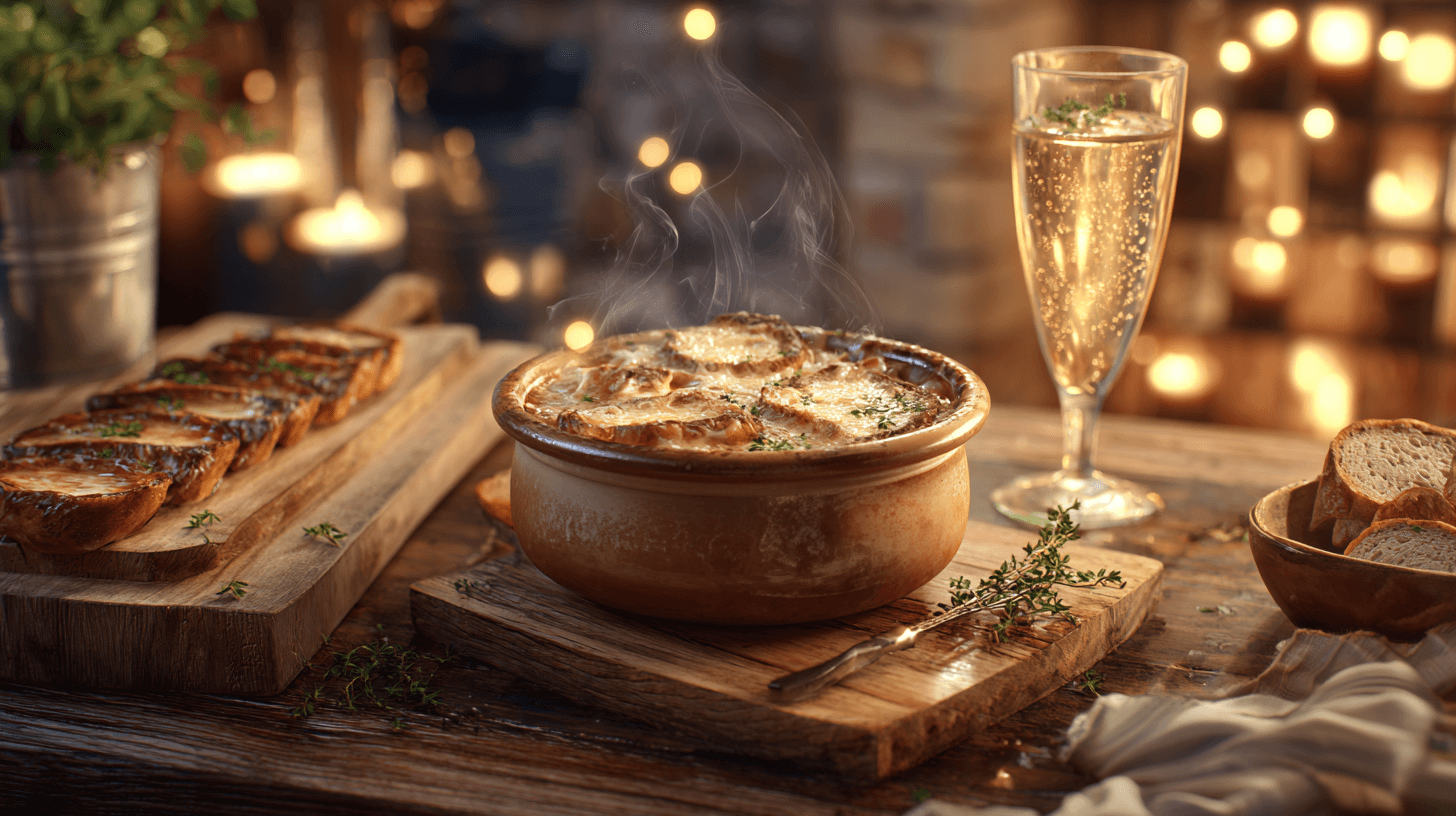
Halal French Onion Soup
Ingredients
Method
- Melt the butter in a large heavy-bottomed pot over medium-low heat. Add the sliced onions and a pinch of salt.
- Cook the onions, stirring occasionally, for 30–40 minutes until they are a deep, rich mahogany brown. Do not rush this step, as caramelization provides the base flavor.
- Add the minced garlic and thyme. Sauté for 1 minute until fragrant.
- Deglaze the pot with the balsamic vinegar, scraping up all the brown bits (fond) from the bottom of the pan.
- Pour in the beef broth and bring to a boil. Reduce heat and simmer uncovered for 15–20 minutes to meld the flavors.
- Taste and season with salt and freshly ground black pepper as needed.
- Ladle the soup into oven-safe bowls. Place a slice of toasted baguette on top of each bowl and cover generously with Gruyère cheese.
- Broil in the oven for 2–3 minutes until the cheese is melted, bubbly, and slightly browned. Serve immediately.
Frequently Asked Questions
Can I make French Onion soup in a slow cooker?
Yes, but with a caveat. A slow cooker is great for simmering the broth, but it struggles to caramelize onions because it retains moisture. You can caramelize the onions in a skillet on the stove first, then transfer them to the slow cooker with the beef broth and seasonings to simmer on low for 6-8 hours.
Why is my soup bitter?
Bitterness usually comes from burning the onions rather than caramelizing them. If you see black flecks in the pot, the onions have carbonized. Unfortunately, this flavor permeates the broth and cannot be fixed. It is crucial to watch the heat during the browning phase. Another source of bitterness can be low-quality beef stock or using too much dried thyme.
What is the best beef cut for making the stock?
For the deepest flavor, use a mix of nutrient-dense bones and meat. Beef shanks (Osso Buco cuts) are excellent because they contain marrow, bone, and meat. Oxtails are also a superb, albeit expensive, choice for gelatin-rich stock. Beef neck bones are a budget-friendly alternative that yields excellent results.
Is Worcester sauce Halal/Permissible?
Standard Worcestershire sauce contains vinegar, molasses, anchovies, and flavorings. Some brands may use malt vinegar (barley-based) or have trace alcohol from fermentation, while others are certified Halal. Always check the label. For a completely safe secular alternative, you can use soy sauce mixed with a drop of vinegar and tamarind paste to mimic the umami depth without worry.
Can I use red onions for French Onion soup?
While you can, it is generally not recommended for the classic aesthetic. Red onions turn a muddy purple-grey color when cooked for long periods, which can make the beef broth look unappealing. Flavor-wise, they are acceptable, but yellow onions remain the superior choice for both color and flavor balance.
Conclusion
French Onion soup is a testament to the power of simple ingredients treated with respect and patience. By utilizing high-quality beef stock, selecting the right onions, and mastering the art of caramelization, you can create a restaurant-quality dish right in your own kitchen without the need for alcohol or pork products. This beef-forward approach not only caters to specific dietary needs but also amplifies the savory, comforting nature of the soup.
Whether you are warming up on a cold winter night or serving an elegant starter at a dinner party, this French Onion soup recipe delivers complex flavors and heartwarming satisfaction. Remember to pair it with the suggested sides from TheWorldBites for a complete culinary experience. Grab your favorite pot, sharpen your knife, and enjoy the process of creating this timeless classic.