
Hawaiian Chicken with Coconut Rice is a culinary masterpiece that transports your taste buds straight to the islands, blending the savory umami of soy-based glazes with the sweet, tropical aroma of coconut. If you have been searching for a meal that perfectly balances salty, sweet, tangy, and creamy elements, this dish is the answer. It is more than just a recipe; it is a vibrant experience that combines the laid-back vibes of a beach barbecue with the comfort of a hearty, homemade meal.
The magic of Hawaiian Chicken with Coconut Rice lies in the contrast. The chicken is typically marinated in a mixture involving pineapple juice, soy sauce, brown sugar, ginger, and garlic, creating a sticky, caramelized exterior when grilled or pan-seared. This bold, punchy protein needs a soothing counterpart, which is where the coconut rice comes in. Fluffy jasmine rice simmered in rich coconut milk provides a creamy, subtle sweetness that cuts through the acidity of the chicken marinade. Whether you are meal-prepping for the week or hosting a summer dinner party, this dish delivers high-impact flavor with relatively low effort.
In this comprehensive guide, we will explore every nuance of making the perfect Hawaiian Chicken with Coconut Rice. From selecting the right cut of poultry to understanding the enzymatic properties of pineapple juice, we will ensure your result is restaurant-quality. We will also dive deep into the technique of making coconut rice that is fluffy never mushy and provide you with pairing options to create a full island feast.
Table of Contents
Essential Ingredients for the Best Hawaiian Chicken with Coconut Rice
To create an authentic-tasting Hawaiian Chicken with Coconut Rice, the quality and selection of your ingredients are paramount. This isn’t just about throwing things into a pan; it is about layering flavors. Let’s break down the shopping list and the “why” behind every item.
The Chicken Selection
While you can technically use any cut of chicken, boneless, skinless chicken thighs are the gold standard for Hawaiian Chicken with Coconut Rice. Thigh meat has a higher fat content than breast meat, which keeps it juicy and forgiving during high-heat cooking methods like grilling. The dark meat also stands up better to the potent marinade, absorbing flavors without becoming stringy or dry. However, if you prefer a leaner option, chicken breasts can be used, provided you pound them to an even thickness to ensure uniform cooking.
The Tropical Marinade Components
The soul of the Hawaiian Chicken with Coconut Rice recipe is the marinade. Here is what you need:
- Pineapple Juice: The star of the show. It provides sweetness and acidity. Fresh pineapple juice contains active enzymes (more on that later), while canned juice is consistent and convenient.
- Soy Sauce: I recommend using low-sodium soy sauce. This allows you to control the salt levels, preventing the reduction from becoming overly saline as it cooks down.
- Brown Sugar: This aids in caramelization. The molasses content in brown sugar adds a depth of flavor that white sugar simply cannot achieve. It helps create those beautiful char marks on the grill.
- Ketchup: It may sound surprising, but a touch of ketchup adds body, vinegar-based tang, and a rich red hue to the glaze.
- Fresh Ginger and Garlic: Powdered spices will not cut it here. You need the spicy kick of fresh grated ginger and the pungency of fresh garlic to balance the sugar.
- Sesame Oil: A teaspoon goes a long way. Toasted sesame oil adds a nutty aroma that rounds out the Asian-fusion profile of the dish.
The Coconut Rice Essentials
For the “Coconut Rice” part of Hawaiian Chicken with Coconut Rice, you need three specific things:
- Jasmine Rice: This long-grain Thai rice has a natural floral aroma that pairs beautifully with coconut. Do not substitute with short-grain sushi rice (too sticky) or brown rice (different liquid ratios required).
- Full-Fat Coconut Milk: Look for canned coconut milk, not the beverage kind found in the dairy aisle. “Lite” coconut milk will result in watery rice; full-fat ensures that creamy, luxurious texture.
- Sea Salt and Sugar: A pinch of salt is crucial to pop the coconut flavor, and a teaspoon of sugar highlights the natural sweetness of the milk.
The Science Behind the Marinade in Hawaiian Chicken with Coconut Rice
Understanding the science behind your food makes you a better cook. When preparing Hawaiian Chicken with Coconut Rice, the interaction between the pineapple juice and the meat is critical. Pineapple contains an enzyme called bromelain.
Bromelain is a proteolytic enzyme, meaning it breaks down protein chains. This makes pineapple juice an incredibly effective tenderizer. However, it is a double-edged sword. If you leave your chicken sitting in a fresh pineapple marinade for too long (over 24 hours), the enzymes will break the meat down too much, resulting in a mushy, mealy texture that is unpalatable.
For the perfect Hawaiian Chicken with Coconut Rice, the sweet spot for marinating is between 4 to 12 hours. This allows the soy and ginger flavors to penetrate the meat while the pineapple juice tenderizes the fibers just enough to make them melt-in-your-mouth tender without destroying the structure. If you are using canned pineapple juice, the pasteurization process deactivates much of the bromelain, making it safer for longer marinades, though it is still best to stick to the 12-hour limit for optimal texture. For more on the science of meat tenderization, you can read further on Serious Eats.
Mastering the Side: Perfect Coconut Rice for Hawaiian Chicken
The “Coconut Rice” in Hawaiian Chicken with Coconut Rice is not merely a bed for the meat; it is a star component. Many home cooks struggle with coconut rice, ending up with a pot that is either burnt at the bottom or gummy in the middle. Here is the foolproof method.
The Rinsing Rule
You must rinse your Jasmine rice. Place the rice in a fine-mesh sieve and run cold water over it until the water runs clear. This removes excess surface starch. If you skip this step, the starch will mix with the thick coconut milk and create a glue-like consistency rather than fluffy, distinct grains.
The Liquid Ratio
Coconut milk is thicker than water, so the absorption rate is slightly different. A general rule for standard rice is 1 part rice to 2 parts water. However, for Hawaiian Chicken with Coconut Rice, you want a ratio of roughly 1 cup of Jasmine rice to 0.75 cups of coconut milk and 0.75 cups of water (or coconut water for extra flavor). Diluting the coconut milk slightly ensures the liquid is thin enough to steam the rice properly without scorching.
The Cooking Process
Combine the rinsed rice, liquids, a pinch of salt, and a teaspoon of sugar in a saucepan. Bring it to a boil over medium-high heat. Once it boils, immediately reduce the heat to the absolute lowest setting, cover with a tight-fitting lid, and let it simmer for 18-20 minutes. Do not lift the lid! Steam is doing the work. After the time is up, remove from heat and let it sit covered for another 10 minutes. This “resting period” allows the moisture to redistribute, resulting in the fluffiest base for your Hawaiian Chicken with Coconut Rice.
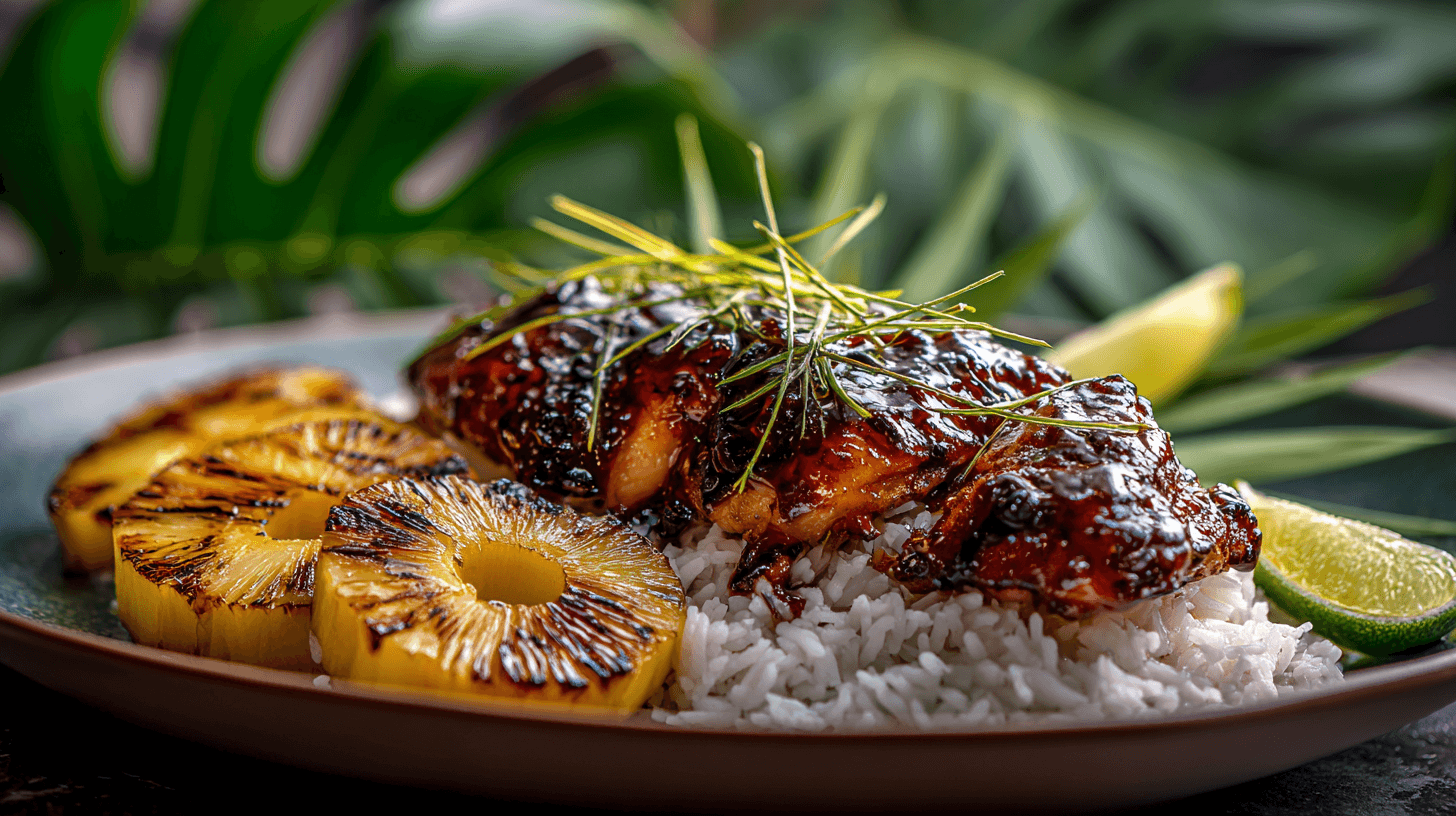
Hawaiian Chicken with Coconut Rice
Ingredients
Equipment
Method
- In a medium saucepan, combine jasmine rice, coconut milk, and a pinch of salt. Bring to a boil, then reduce to a simmer, cover, and cook for 15-18 minutes until rice is tender and liquid is absorbed.
- While rice cooks, heat oil in a large skillet over medium-high heat. Add chicken pieces and sear until golden brown on all sides and cooked through (about 8-10 minutes).
- In a small bowl, whisk together pineapple juice, soy sauce, brown sugar, garlic, and ginger. Pour the mixture into the skillet with the chicken.
- Add pineapple chunks and simmer for 5-7 minutes until the sauce thickens into a glossy glaze coating the chicken.
- Fluff the coconut rice with a fork and serve the glazed Hawaiian chicken over the rice. Garnish with scallions and sesame seeds.
Notes
Cooking Methods for Hawaiian Chicken with Coconut Rice
Versatility is a major benefit of this recipe. While grilling is traditional for that island “Huli Huli” vibe, you can make delicious Hawaiian Chicken with Coconut Rice using various appliances.
1. The Outdoor Grill (Best Flavor)
To get that authentic char, preheat your gas or charcoal grill to medium-high heat (around 400°F). Oil the grates well to prevent sticking, as the sugar in the marinade caramelizes quickly. Grill the chicken for 5-7 minutes per side. Baste the chicken with reserved (fresh) marinade during the last 2 minutes of cooking. The sugar will burn if applied too early, so save the glazing for the end. The smoky flavor combined with the sweet glaze makes this the superior version of Hawaiian Chicken with Coconut Rice.
2. Stovetop Searing (Best for Weeknights)
Use a cast-iron skillet or a heavy-bottomed non-stick pan. Heat a tablespoon of oil over medium-high heat. Remove the chicken from the marinade (shaking off excess) and lay it in the pan. Cook for 6-8 minutes per side. The sugars will darken quickly, so manage your heat if it starts smoking, turn it down to medium. This method creates a wonderful fond (browned bits) in the pan, which can be deglazed with a little pineapple juice to make a sauce to drizzle over your Hawaiian Chicken with Coconut Rice.
3. Oven Baked (Best for Large Batches)
Preheat your oven to 400°F (200°C). Arrange the chicken on a foil-lined baking sheet (crucial for easy cleanup due to the sticky glaze). Bake for 25-30 minutes. To mimic the grill, switch the oven to “Broil” for the last 2-3 minutes to caramelize the tops. This is the most hands-off way to prepare Hawaiian Chicken with Coconut Rice.
What to Serve With Hawaiian Chicken with Coconut Rice: Perfect Pairings
To make the most of this recipe, consider pairing it with these favorites from our collection:
Troubleshooting Common Issues with Hawaiian Chicken with Coconut Rice
Even with the best recipes, things can go wrong. Here is how to troubleshoot the most common problems when cooking Hawaiian Chicken with Coconut Rice.
Problem: The Chicken is Burnt on the Outside but Raw Inside
The Cause: The high sugar content in the pineapple juice and brown sugar marinade burns at a lower temperature than the meat cooks.
The Fix: Use a two-zone fire if grilling (sear over high heat, then move to the cooler side to finish cooking). If using a skillet, sear the outside and then finish the chicken in a 350°F oven for 10 minutes. Always use a meat thermometer to check for an internal temperature of 165°F. For more on safe cooking temperatures, check the FoodSafety.gov guidelines.
Problem: The Coconut Rice is Crunchy
The Cause: The lid was lifted during cooking, releasing steam, or the heat was too high, evaporating the liquid before the grain softened.
The Fix: Add 1/4 cup of boiling water to the pot, cover tightly, and cook on low for another 5-7 minutes. Ensure your pot has a heavy lid.
Problem: The Sauce is Too Runny
The Cause: Marinades do not naturally thicken into glazes without heat and evaporation.
The Fix: Take the leftover marinade (ensure you boil it to kill bacteria from raw chicken) or make a fresh batch, and simmer it in a saucepan with a cornstarch slurry (1 tsp cornstarch mixed with 1 tsp water). Whisk constantly until it coats the back of a spoon. This thick glaze is essential for the final presentation of Hawaiian Chicken with Coconut Rice.
Dietary Adaptations for Hawaiian Chicken with Coconut Rice
One of the beautiful things about Hawaiian Chicken with Coconut Rice is how easily it can be adapted for different dietary needs.
Gluten-Free
The only ingredient in this dish that typically contains gluten is soy sauce. To make this recipe 100% gluten-free, simply substitute the soy sauce with Tamari or Coconut Aminos. Coconut Aminos are actually a fantastic choice here as they are naturally sweeter, complementing the pineapple profile of the Hawaiian Chicken with Coconut Rice.
Paleo / Whole30
For a Paleo version, replace the brown sugar with honey or date paste. Use Coconut Aminos instead of soy sauce. Replace the white Jasmine rice with cauliflower rice. To make “Coconut Cauliflower Rice,” simply sauté riced cauliflower in a tablespoon of coconut oil and splash in some coconut milk at the end for creaminess.
Storing and Reheating Hawaiian Chicken with Coconut Rice
Hawaiian Chicken with Coconut Rice is an excellent candidate for meal prep. The flavors of the chicken often deepen after sitting for a day.
Refrigeration
Store the chicken and rice in separate airtight containers if possible, or in compartment meal prep containers. They will last in the refrigerator for up to 4 days. If the rice clumps together when cold (which is normal for coconut rice due to the solidified fat), sprinkle a teaspoon of water over it before reheating.
Freezing
The Chicken: Freezes beautifully. You can freeze the cooked chicken for up to 3 months. Alternatively, you can freeze raw chicken in the marinade. As it thaws, it will marinate, saving you time later.
The Rice: Coconut rice can be frozen, but the texture may change slightly. Freeze it in flat portions in freezer bags. When reheating, steam it to bring back moisture.
Reheating Instructions
To reheat Hawaiian Chicken with Coconut Rice without drying it out, the microwave is actually quite effective if you cover the dish with a damp paper towel. This steams the food. If reheating the chicken in the oven, cover it with foil and add a splash of water or pineapple juice to the pan to keep it moist.
The Cultural Context of Hawaiian BBQ
While “Hawaiian Chicken” is a broad term, this style of cooking is heavily influenced by “Huli Huli Chicken,” a staple in Hawaii since the 1950s. Created by Ernest Morgado, the term “huli” means “turn” in Hawaiian. Traditionally, the chicken was cooked between two grills and turned frequently. The glaze rich in soy, ginger, and sugar reflects the melting pot of cultures in Hawaii, including Japanese, Chinese, Filipino, and native Hawaiian influences. When you make Hawaiian Chicken with Coconut Rice, you are partaking in a modern evolution of this rich culinary tradition. You can learn more about the history of Hawaiian cuisine at Go Hawaii.
Frequently Asked Questions About Hawaiian Chicken with Coconut Rice
Can I use chicken breasts instead of thighs?
Yes, you can use chicken breasts for Hawaiian Chicken with Coconut Rice. However, breasts dry out faster than thighs. To mitigate this, pound the breasts to an even thickness so they cook quickly and evenly. Do not skip the marinade, as the lack of fat in the breast meat requires the added moisture and flavor.
Is coconut milk the same as coconut cream?
No. Coconut cream is much thicker and has a higher fat content. While you can use it, it will make the rice extremely rich and heavy. If you only have coconut cream, dilute it with water (50/50 mix) before adding it to the rice for your Hawaiian Chicken with Coconut Rice.
Can I make this in an Instant Pot?
Yes! For the chicken: Sauté mode to sear, then Pressure Cook for 8 minutes. For the rice: Use the “Rice” setting but adhere to the coconut milk/water ratios mentioned above. Doing both at once (pot-in-pot method) is a great time saver for Hawaiian Chicken with Coconut Rice.
Is this recipe spicy?
Generally, Hawaiian Chicken with Coconut Rice is sweet and savory, not spicy. The ginger adds a warm kick, but no heat. If you want to add spice, include red pepper flakes or Sriracha in the marinade, or serve with a side of chili garlic paste.
Why is my pineapple marinade making the chicken mushy?
This is due to the enzyme bromelain found in pineapple juice. If the chicken sits in the marinade for more than 24 hours, the meat fibers break down too much. Limit marinating time to 12 hours maximum for the best texture in your Hawaiian Chicken with Coconut Rice.
Conclusion: Bring the Islands to Your Kitchen
Hawaiian Chicken with Coconut Rice is more than just a dinner; it is a celebration of flavor. It combines the ease of weeknight cooking with the complex, layered tastes of a gourmet meal. By following the tips on marinating times, rice rinsing, and heat management, you are guaranteed a dish that will impress family and guests alike.
The interplay between the char-grilled, tangy chicken and the subtle, creamy sweetness of the coconut rice creates a harmony that defines comfort food. Don’t forget to garnish generously with green onions and perhaps a sprinkle of toasted sesame seeds or chopped macadamia nuts for that extra crunch. Whether it is the middle of summer or a cold winter evening, a plate of Hawaiian Chicken with Coconut Rice is the sunshine your dining table needs.